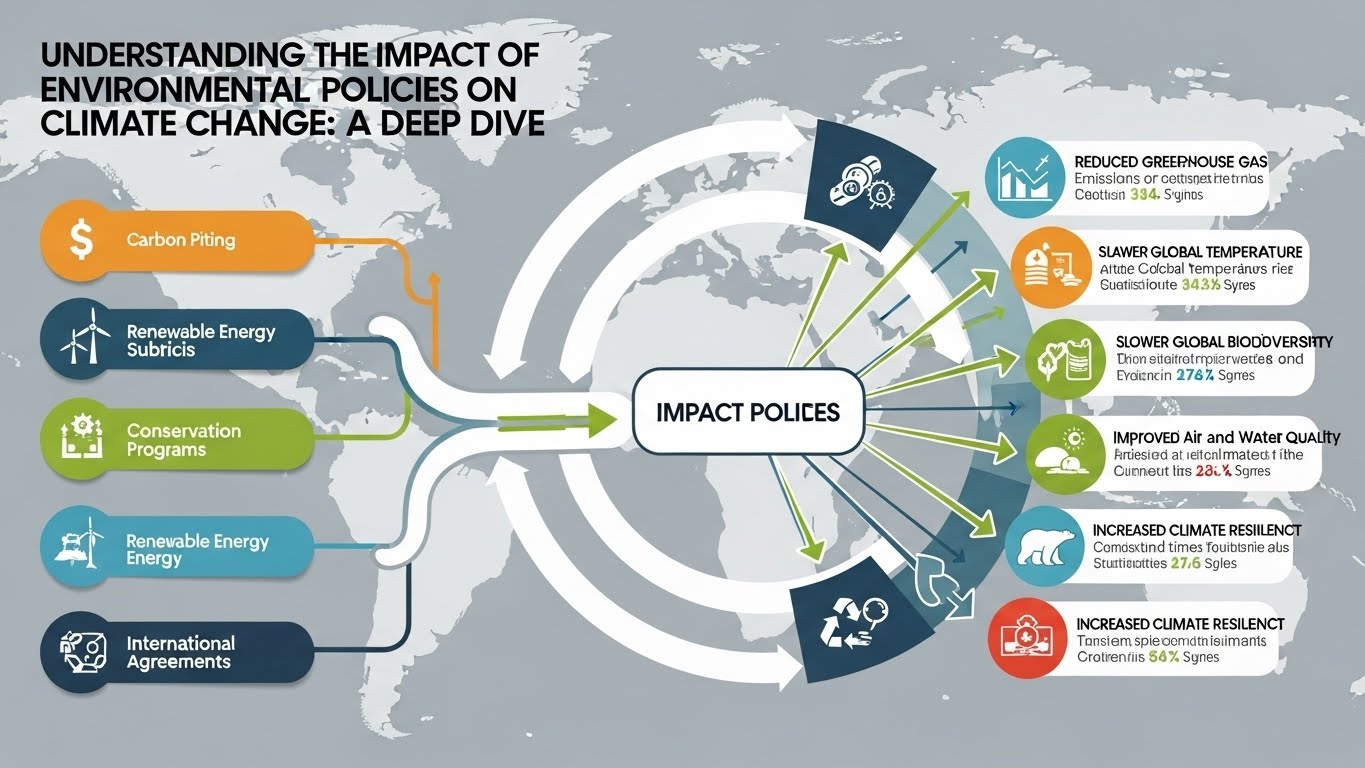
Understanding the Impact of Environmental Policies on Climate Change: A Deep Dive
Climate change remains one of the most pressing challenges of our time, prompting global leaders to implement environmental policies aimed at mitigating its effects. These policies play a crucial role in shaping the future of our planet by influencing how nations and industries operate in relation to the environment. This blog post delves into the impact of these policies, examining their effectiveness, challenges, and future implications.
The Role of Environmental Policies in Combating Climate Change
Environmental policies are essential tools used by governments and international bodies to regulate activities that contribute to climate change. These policies often focus on reducing greenhouse gas emissions, promoting renewable energy, and enhancing energy efficiency. By setting stringent regulations and offering incentives, environmental policies aim to reduce human impact on the planet.
One of the key areas where these policies have made significant strides is in the reduction of carbon emissions. For example, the European Union’s 2020 climate and energy package set ambitious targets for reducing carbon emissions, increasing the share of renewable energy, and improving energy efficiency. These policies have led to substantial reductions in carbon footprints across member states, demonstrating the potential effectiveness of well-designed regulations.
Challenges in Implementing Environmental Policies

Despite their importance, environmental policies face numerous challenges. One of the most significant obstacles is the economic impact of these regulations. Industries, particularly those reliant on fossil fuels, often resist changes that could increase operational costs. This resistance can lead to delays or watered-down policy measures that fail to achieve their intended outcomes.
Additionally, the political landscape can greatly influence the success of environmental policies. Changes in government, differing priorities, and political lobbying can all impede the implementation of effective climate policies. For instance, in the United States, the rollback of several environmental regulations in recent years illustrates how political shifts can undermine efforts to combat climate change.
The Effectiveness of International Environmental Agreements
International agreements play a pivotal role in coordinating global efforts to address climate change. The Paris Agreement, adopted in 2015, is a landmark accord that aims to limit global warming to well below 2 degrees Celsius. By encouraging countries to set nationally determined contributions (NDCs), the agreement fosters a collaborative approach to reducing emissions.
However, the effectiveness of international agreements depends heavily on the commitment of individual countries. While some nations have made significant progress towards their NDCs, others lag behind, often due to financial constraints or lack of technological resources. This disparity highlights the need for mechanisms that ensure accountability and support developing countries in achieving their climate goals.
Innovative Policy Approaches and Their Impact
In recent years, several innovative policy approaches have emerged, offering new pathways to tackle climate change. Carbon pricing, for example, has gained traction as a market-based solution to reduce emissions. By putting a price on carbon, governments can incentivize businesses to adopt cleaner technologies and reduce their carbon footprints.
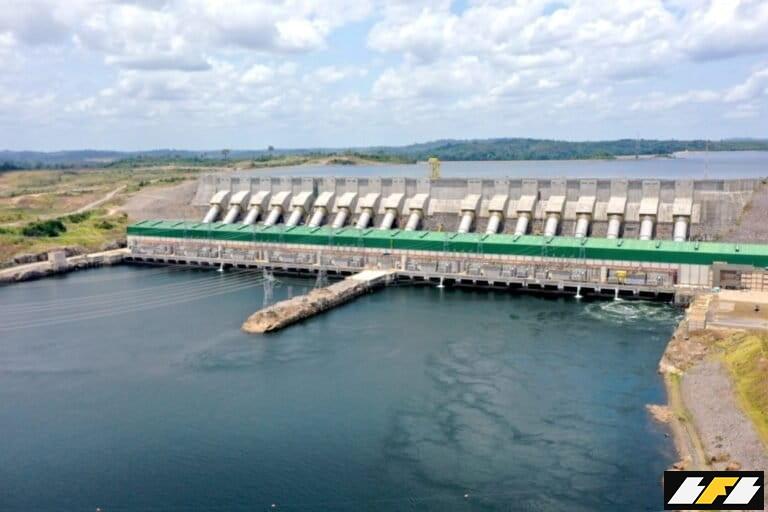
Renewable energy incentives are another critical policy tool. By providing subsidies and tax breaks for solar, wind, and other renewable energy sources, governments can accelerate the transition away from fossil fuels. Countries like Germany have successfully increased their renewable energy capacity through such incentives, setting a precedent for others to follow.
The Future of Environmental Policies
As the urgency of addressing climate change grows, the future of environmental policies will likely involve more comprehensive and integrated approaches. Policymakers are increasingly recognizing the need for policies that not only address emissions but also consider broader environmental and social factors. This holistic approach could include measures to protect biodiversity, promote sustainable agriculture, and support climate adaptation efforts.
Moreover, technological advancements will play a crucial role in shaping future policies. Innovations in energy storage, carbon capture, and digital monitoring can enhance the effectiveness of existing policies and provide new solutions to environmental challenges.
Takeaways
Environmental policies are vital instruments in the global fight against climate change, offering a framework for reducing emissions and transitioning to a more sustainable future. While challenges remain, the progress made through existing policies and international agreements demonstrates their potential impact. As we move forward, it is essential for governments, industries, and individuals to collaborate and innovate, ensuring that environmental policies continue to evolve and address the complexities of climate change effectively.

For more information on how environmental policies are shaping the future, consider exploring the resources provided by the World Bank on climate change and related topics. Understanding the intricate relationship between policy and climate action is key to creating a sustainable and resilient world for future generations.
The Role of Public Awareness and Participation
Public awareness and participation are increasingly recognized as critical components in the successful implementation of environmental policies. Educating communities about the impacts of climate change and the importance of sustainability can foster a culture of environmental stewardship. When citizens are informed and engaged, they are more likely to support policy measures and adopt sustainable practices in their daily lives.
Grassroots movements and non-governmental organizations (NGOs) often play a pivotal role in raising awareness and mobilizing action. Campaigns that highlight the urgency of climate action can influence both public opinion and political agendas. The rise of youth-led movements, such as the school strikes for climate inspired by Greta Thunberg, exemplifies the power of public engagement in driving policy change.
Technological Innovations and Environmental Policies
Technological advancements continue to reshape the landscape of environmental policy. Innovations in renewable energy, smart grid technology, and electric transportation are opening new avenues for reducing emissions and enhancing energy efficiency. Policymakers are increasingly leveraging these technologies to create more dynamic and effective environmental regulations.

For instance, the integration of smart meters and real-time data analytics allows for more precise monitoring of energy consumption, helping to identify inefficiencies and optimize energy use. This data-driven approach can inform policy decisions and enable more targeted interventions, ultimately leading to greater reductions in emissions.
Challenges in Balancing Economic Growth and Environmental Protection
One of the most significant challenges faced by policymakers is balancing economic growth with environmental protection. The transition to a low-carbon economy often requires substantial investment and can disrupt established industries. Policymakers must carefully navigate these challenges to ensure that environmental policies do not inadvertently hinder economic development.
Green finance and investment can play a crucial role in addressing this challenge. By directing capital towards sustainable projects and technologies, governments and financial institutions can stimulate economic growth while advancing environmental goals. Initiatives such as green bonds and climate funds are examples of how financial mechanisms can support the transition to a sustainable economy.
Global Cooperation and Policy Harmonization
Climate change is a global issue that transcends national borders, necessitating international cooperation and policy harmonization. While national policies are important, collective action is essential to achieve meaningful progress. International forums like the Intergovernmental Panel on Climate Change (IPCC) provide a platform for countries to share knowledge, set common goals, and coordinate efforts.
Harmonizing policies across regions can help prevent issues such as carbon leakage, where industries relocate to countries with less stringent regulations. By aligning environmental standards and practices, countries can create a level playing field that encourages sustainable development and minimizes competitive disadvantages.

The Importance of Adaptation Strategies
While mitigation efforts are crucial, adaptation strategies are equally important in addressing the impacts of climate change. As climate-related events become more frequent and severe, policies that enhance resilience and adaptive capacity are essential. Adaptation measures can include investing in resilient infrastructure, protecting natural ecosystems, and supporting communities in managing climate risks.
Governments can play a proactive role in advancing adaptation efforts by integrating climate considerations into national planning and development strategies. Collaboration with local communities and stakeholders is also vital to ensure that adaptation measures are context-specific and effectively address local needs.
Takeaways
In conclusion, environmental policies are indispensable in the global effort to combat climate change. By setting regulatory frameworks, promoting innovative solutions, and fostering international collaboration, these policies provide a pathway to a more sustainable future. The effectiveness of environmental policies hinges on the commitment of governments, industries, and individuals to work together towards common goals.
As we continue to face the challenges and opportunities associated with climate change, it is crucial to remain adaptable and open to new approaches. By embracing technological advancements, encouraging public participation, and prioritizing both mitigation and adaptation strategies, we can ensure that environmental policies remain robust and impactful in the years to come.
For further exploration of the intersection of environmental policy and climate change, resources such as International Institute for Sustainable Development (IISD) offer valuable insights and research. Engaging with these materials can deepen our understanding and inspire action towards a more sustainable world.
About the Author