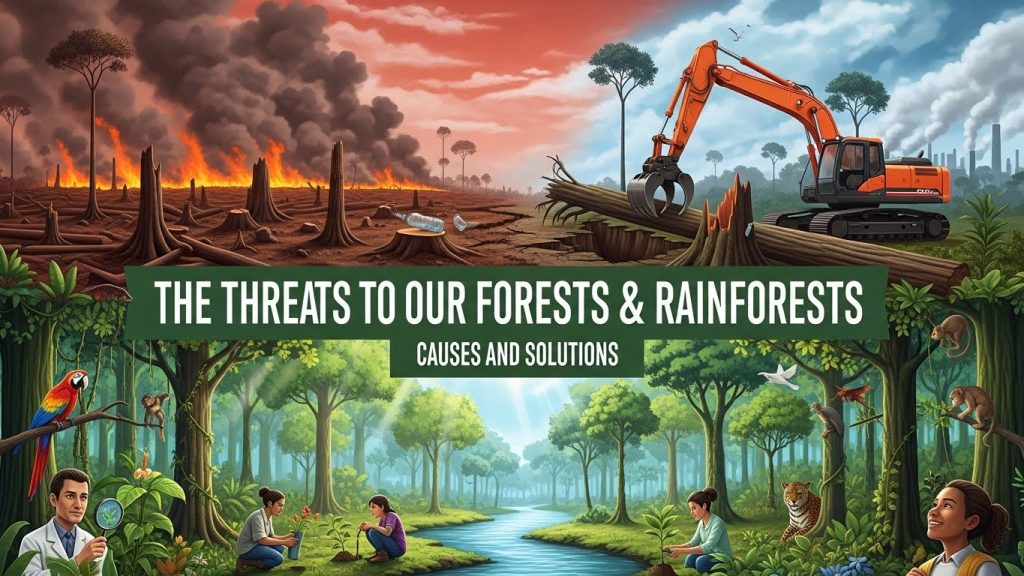
The Threats to Our Forests & Rainforests: Causes and Solutions
Forests and rainforests are vital to the health of our planet. They serve as the lungs of the Earth, absorbing carbon dioxide and releasing oxygen, supporting biodiversity, and providing livelihoods for millions of people. However, these essential ecosystems face numerous threats that endanger their survival. Understanding these threats and exploring viable solutions is crucial for conservation efforts.
Deforestation: A Leading Threat
One of the most significant threats to forests and rainforests is deforestation. This process involves the large-scale removal of trees, often resulting in damage to the quality of the land. The primary drivers of deforestation include agricultural expansion, logging, infrastructure development, and mining.
Agricultural activities, particularly the cultivation of soy, palm oil, and cattle ranching, are responsible for approximately 80% of global deforestation. As demand for these products rises, forests are often cleared to create more farmland. Logging, both legal and illegal, further exacerbates the situation as valuable trees are harvested for timber and paper products.
Climate Change: An Amplifying Factor
Climate change poses another significant threat to forests and rainforests. Rising temperatures and changing precipitation patterns can lead to droughts, which increase the likelihood of forest fires. These fires can devastate large areas of forest, releasing stored carbon dioxide back into the atmosphere and exacerbating global warming.
Additionally, climate change can disrupt the delicate balance of forest ecosystems, threatening the survival of numerous plant and animal species. As forest health declines, the ability of these ecosystems to act as carbon sinks diminishes, creating a feedback loop that accelerates climate change.
Loss of Biodiversity
The loss of biodiversity is both a threat to and a result of forest degradation. Forests and rainforests are home to an estimated 80% of the world’s terrestrial species, including many that have yet to be discovered. The destruction of these habitats leads to the extinction of countless species, many of which play critical roles in their ecosystems.

Biodiversity loss can undermine ecosystem services, such as pollination, nutrient cycling, and disease regulation, ultimately impacting human well-being. Understanding the importance of biodiversity is essential for developing strategies to protect these valuable ecosystems.
Indigenous Communities and Forests
Indigenous communities have managed and lived in harmony with forests for generations, relying on them for food, medicine, and spiritual practices. However, these communities often face displacement due to deforestation and other industrial activities. Their removal not only threatens their way of life but also disrupts the traditional knowledge and practices that have helped maintain forest ecosystems.
Supporting indigenous rights and land tenure is a crucial part of forest conservation. Recognizing indigenous people’s role in protecting forests can lead to more sustainable management practices and improved conservation outcomes.
Solutions to Protect Forests and Rainforests
Addressing the threats to forests and rainforests requires a multi-faceted approach. Efforts must be made at local, national, and global levels to develop and implement effective conservation strategies.
Promoting Sustainable Agriculture
One solution is promoting sustainable agricultural practices that minimize deforestation. Agroforestry, which integrates trees and shrubs into agricultural landscapes, can improve soil health, increase biodiversity, and provide additional income sources for farmers. Encouraging the adoption of sustainable agriculture can significantly reduce the pressure on forests.
Strengthening Forest Governance
Improving forest governance is essential for preventing illegal logging and ensuring sustainable management. This includes enforcing existing laws, increasing transparency in the timber trade, and involving local communities in decision-making processes. Strengthening governance can help protect forests from unsustainable exploitation.
Reforestation and Afforestation
Reforestation and afforestation are critical components of forest conservation. Reforestation involves replanting trees in deforested areas, while afforestation focuses on creating new forests on previously non-forested lands. These efforts can restore degraded ecosystems, enhance biodiversity, and increase carbon sequestration.
Supporting Indigenous Rights
Protecting the rights of indigenous communities is vital for forest conservation. Ensuring their land tenure and involving them in conservation initiatives can lead to more sustainable forest management. Recognizing the value of traditional ecological knowledge can enhance conservation strategies and promote resilient ecosystems.
Takeaways
The threats to our forests and rainforests are numerous and complex, but they are not insurmountable. By understanding the causes and implementing targeted solutions, we can protect these vital ecosystems for future generations. From promoting sustainable agriculture to supporting indigenous rights, a comprehensive approach is needed to preserve the planet’s forests and rainforests.
Collective efforts from governments, organizations, and individuals are essential in mitigating threats and ensuring the health and sustainability of our forests. By taking action now, we can help safeguard these irreplaceable ecosystems and the myriad benefits they provide to the planet and its inhabitants.
The Role of International Policies and Agreements
International cooperation through policies and agreements plays a crucial role in forest conservation. Initiatives such as the Paris Agreement and the United Nations’ REDD+ program (Reducing Emissions from Deforestation and Forest Degradation) aim to reduce carbon emissions by incentivizing forest conservation and sustainable management practices. These agreements provide a framework for countries to work together towards common goals and share best practices for forest preservation.
Additionally, the Convention on Biological Diversity (CBD) addresses biodiversity conservation and the sustainable use of forest resources, encouraging countries to implement strategies that protect ecosystems and species. By aligning national policies with international goals, countries can leverage global support and resources to enhance their conservation efforts.
Technology and Innovation in Forest Conservation
Technological advancements have opened new avenues for monitoring and protecting forests. Satellite imagery and remote sensing technologies allow for real-time monitoring of deforestation and forest degradation, enabling quick responses to illegal activities. These tools can help governments and conservation organizations track changes in forest cover and assess the effectiveness of conservation strategies.
Moreover, the use of drones and geographic information systems (GIS) can provide detailed data on forest structure and biodiversity, aiding in the planning and implementation of reforestation and afforestation projects. Embracing technology can greatly enhance our ability to protect and manage forests effectively.
Community-Based Conservation Initiatives
Community involvement is essential for sustainable forest management. Local communities, particularly those living near forested areas, have a vested interest in maintaining the health of these ecosystems. Community-based conservation initiatives empower local populations to take an active role in forest management and conservation efforts.
For example, community forest management programs allow local groups to manage forest resources sustainably, providing economic incentives and fostering a sense of ownership. These programs have been successful in reducing deforestation rates and enhancing biodiversity, highlighting the importance of community engagement in conservation efforts.
Education and Awareness Campaigns
Raising awareness about the importance of forests and the threats they face is crucial for fostering a culture of conservation. Education campaigns can highlight the ecological, economic, and social benefits of forests, encouraging individuals and communities to support conservation initiatives.
Integrating environmental education into school curricula can instill a sense of responsibility and stewardship in future generations. Public awareness campaigns, through media and social platforms, can also mobilize broader support for forest conservation, inspiring collective action to address the challenges facing these vital ecosystems.
Corporate Responsibility and Sustainable Practices
Businesses play a significant role in forest conservation through their supply chain practices. Many companies are adopting sustainable sourcing policies, ensuring that their products do not contribute to deforestation. By committing to sustainable practices, businesses can drive demand for responsibly sourced products and encourage suppliers to adopt environmentally friendly practices.
Furthermore, companies can invest in reforestation projects and support conservation initiatives as part of their corporate social responsibility efforts. By prioritizing sustainability, businesses can contribute positively to forest conservation while meeting consumer demand for eco-friendly products.
Conclusion: A Collective Responsibility
Protecting our forests and rainforests is a collective responsibility that requires the collaboration of governments, businesses, communities, and individuals. By understanding the threats and implementing comprehensive solutions, we can preserve these vital ecosystems for future generations. From international agreements to grassroots initiatives, every effort counts in the fight to save our forests.
In the end, the preservation of forests and rainforests is not just about environmental protection but also about securing a sustainable future for all life on Earth. By taking decisive action today, we can ensure that these irreplaceable ecosystems continue to thrive and provide essential services for generations to come.
Investing in Research and Development
Investment in scientific research and development is crucial for advancing our understanding of forest ecosystems and finding innovative solutions to the challenges they face. Research can provide insights into the complex interactions within forest ecosystems, enabling the development of targeted conservation strategies.
For example, studies on carbon sequestration processes can inform reforestation efforts, helping to maximize their impact on climate change mitigation. Similarly, research on forest regeneration and resilience can guide restoration projects, ensuring they support biodiversity and ecosystem health.
Collaborations between academic institutions, governments, and non-governmental organizations can facilitate the exchange of knowledge and resources, driving innovation in forest conservation.
Economic Incentives for Conservation
Economic incentives can be powerful tools for promoting forest conservation. Payments for ecosystem services (PES) programs compensate landowners for managing their land in ways that provide ecological benefits, such as carbon sequestration, water purification, and biodiversity preservation.
Carbon credits, generated through reforestation and forest conservation projects, offer another financial mechanism for incentivizing sustainable land management. By participating in carbon markets, landowners and companies can generate revenue while contributing to global climate goals.
Implementing these economic incentives requires careful design and monitoring to ensure they achieve their intended outcomes and benefit local communities.
Engaging Youth and Future Leaders
Youth engagement is vital for the long-term success of forest conservation efforts. Young people bring energy, creativity, and fresh perspectives to the conservation movement, driving innovation and change.
Programs that involve youth in conservation activities, such as tree planting, wildlife monitoring, and environmental education, can inspire a lifelong commitment to environmental stewardship. Mentorship and training opportunities can also prepare young leaders to take on roles in conservation science, policy, and advocacy.
By empowering the next generation, we can ensure that the momentum for forest conservation continues to grow and evolve.
Strengthening Global Partnerships
Global partnerships are essential for addressing the transboundary challenges of forest conservation. Collaborative efforts, such as the Global Forest Watch initiative and the Bonn Challenge, bring together governments, organizations, and communities to share resources, expertise, and best practices.
These partnerships facilitate coordinated action, enabling countries to work towards common goals and address complex issues such as illegal logging and biodiversity loss. By fostering international cooperation, we can create a united front in the fight to protect the world’s forests.
The Role of Citizen Science
Citizen science initiatives offer an opportunity for individuals to contribute to forest conservation by collecting data, monitoring biodiversity, and supporting research projects. These programs engage the public in scientific research, raising awareness and fostering a sense of connection to the natural world.
Citizen science can provide valuable data on forest health, species distribution, and the impacts of climate change, supplementing traditional research efforts. By involving citizens in conservation, we can harness the power of community engagement to support forest preservation.
Conclusion: A Call to Action
The challenges facing our forests and rainforests are immense, but they are not insurmountable. By taking a holistic approach that includes policy development, technological innovation, community engagement, and education, we can protect these vital ecosystems for future generations.
Every action, no matter how small, contributes to the larger goal of forest conservation. Whether through individual choices, community involvement, or advocacy for policy change, we all have a role to play in safeguarding our planet’s forests.
As we move forward, let us commit to working together to create a sustainable future where forests and rainforests continue to thrive, supporting the rich diversity of life they harbor and the countless benefits they provide to humanity. The time to act is now, and with collective determination, we can make a difference.
About the Author