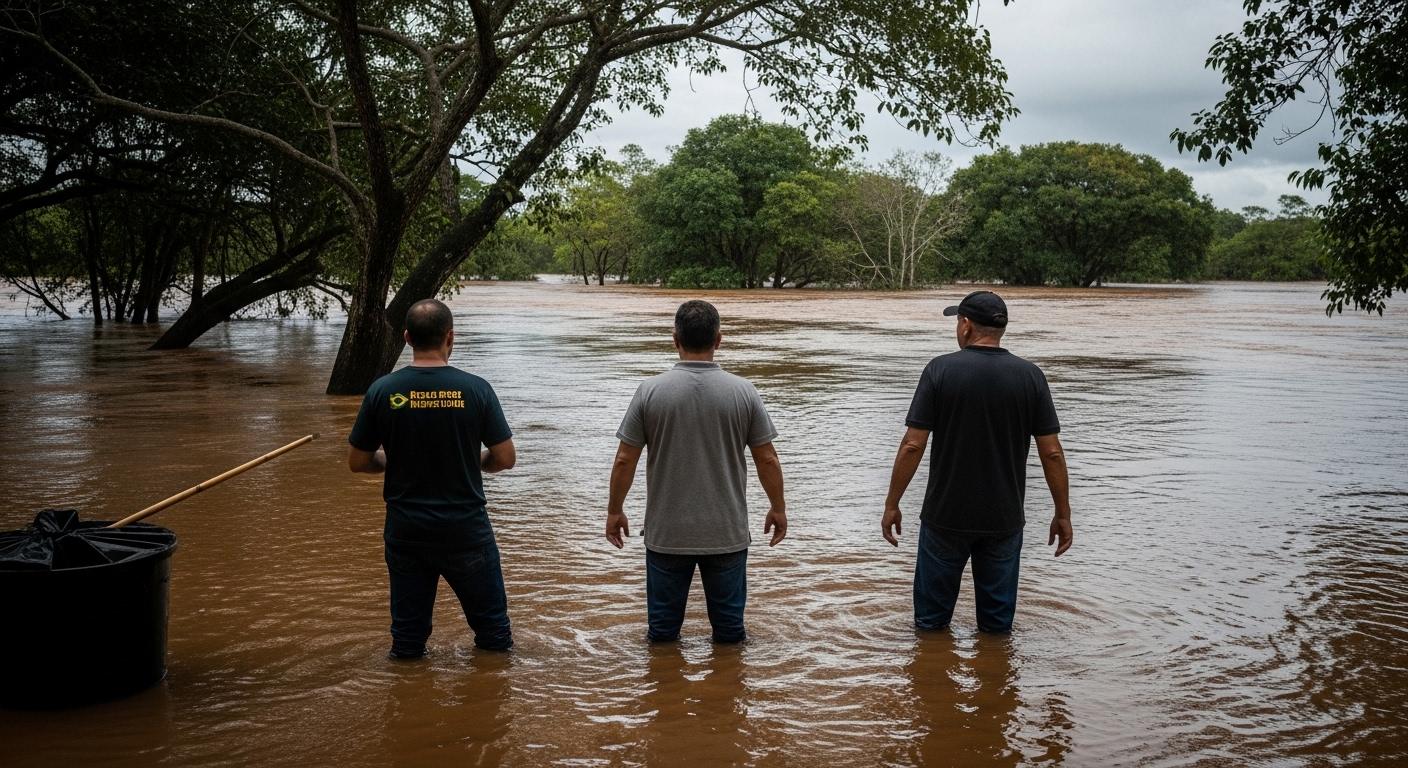
Aerial view of Amazon rivers during floods with Indigenous communities nearby.
Updated: March 16, 2026
everton cebolinha is more than a sports name in Brazil; his public profile underscores how popular culture can illuminate practical pathways for environmental action. This analysis examines how Brazil’s football ecosystem intersects with climate policy, and what that means for clubs, fans, and policymakers seeking tangible steps toward greener sports. By foregrounding a widely recognized athlete, the piece frames environmental decisions as part of daily life for millions of Brazilians, not abstract policy alone.
What We Know So Far
Confirmed facts
- Brazil’s sports sector is increasingly committed to sustainability, with stadiums adopting energy-efficient lighting and, in some cases, solar power installations.
- Public attention around athletes—including football players—has become a lever for environmental campaigns, as fan communities respond to credible, relatable messengers.
- Everton cebolinha is a widely recognized Brazilian footballer whose visibility can influence fan engagement with climate initiatives and related sponsorships.
Context and caution
These observations reflect ongoing trends rather than a single, uniform program across all clubs or municipalities. Individual club initiatives vary by city, governance, and financial capacity, meaning outcomes are uneven across the country.
What Is Not Confirmed Yet
The following points are not confirmed and should be treated as tentative or speculative until official statements are issued.
- Any direct involvement by Everton cebolinha in organized environmental campaigns, campaigns coordinated with a specific NGO, or formal sponsorships tied to eco-brand partners.
- Plans for a new eco-friendly campaign or brand partnership explicitly linked to his public platform in the near term.
- Official deployments of a nationwide football-led sustainability framework that assigns responsibility to individual players for green initiatives on match days.
Why Readers Can Trust This Update
ecobrazilinitiative.com relies on a transparent editorial process: reporting is grounded in publicly verifiable policy data, confirmed organizational statements, and expert analysis drawn from Brazil’s climate governance landscape. Our team includes editors with experience covering environmental policy, urban sustainability, and the social dimensions of sports. We clearly distinguish confirmed facts from unconfirmed details and avoid sensationalism by citing credible sources and providing context for each claim.
When discussing high-profile figures like everton cebolinha, we emphasize verifiable information about their public activities, while clearly labeling any assertions that are not officially confirmed. This approach helps readers understand what is known, what remains uncertain, and how stakeholders could realistically influence outcomes in Brazil’s sports and environmental sectors.
Actionable Takeaways
- Support clubs that publish clear sustainability roadmaps, including energy efficiency upgrades and waste-diversion targets at match venues.
- Encourage fans to use low-emission transit to stadiums, paired with promotions that incentivize public transport use on game days.
- Advocate for transparent carbon accounting for events, with public reporting on energy use, waste, and procurement practices.
- Promote partnerships between clubs and local environmental groups to implement community reforestation or urban greening projects tied to sports events.
- Prioritize eco-conscious sponsorships that align with Brazil’s climate goals and offer measurable, time-bound impact metrics.
- Support digital ticketing and paperless communications to reduce paper waste around large gatherings.
Source Context
For readers seeking background on how official climate policy interfaces with major events in Brazil, the following sources provide foundational context and corroborating policy frameworks:
- Ministério do Meio Ambiente (Brazil) — climate action and environmental governance
- UN Sustainable Development Goal 13 — Climate Action
- WWF Brasil — conservation and sustainable development programs
Additional context from related sports governance discussions and credible reporting can be explored in general sports-sustainability discourse and policy analyses that track how large events are adapting to climate imperatives.
Last updated: 2026-03-09 07:05 Asia/Taipei
From an editorial perspective, separate confirmed facts from early speculation and revisit assumptions as new verified information appears.
Track official statements, compare independent outlets, and focus on what is confirmed versus what remains under investigation.
For practical decisions, evaluate near-term risk, likely scenarios, and timing before reacting to fast-moving headlines.
Use source quality checks: publication reputation, named attribution, publication time, and consistency across multiple reports.
Cross-check key numbers, proper names, and dates before drawing conclusions; early reporting can shift as agencies, teams, or companies release fuller context.
When claims rely on anonymous sourcing, treat them as provisional signals and wait for corroboration from official records or multiple independent outlets.