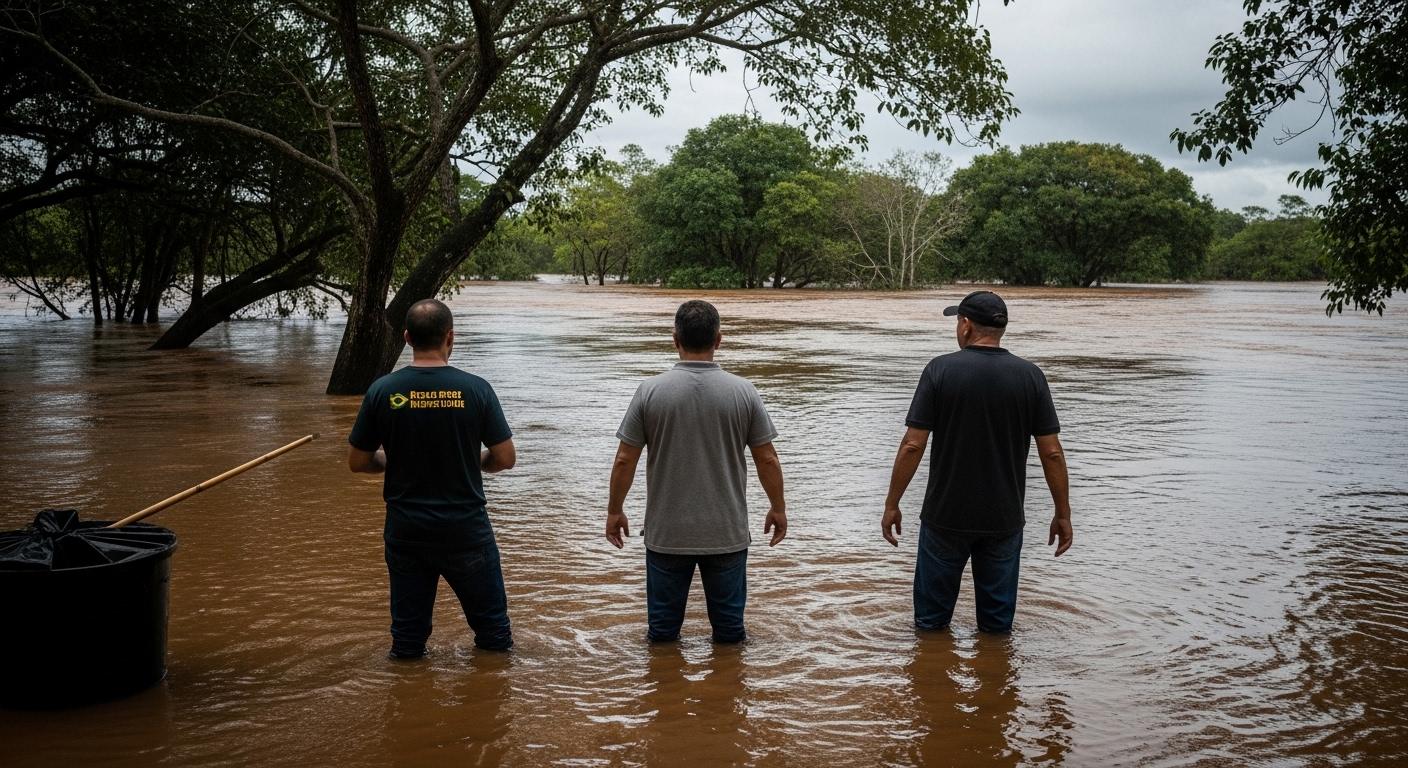
Aerial view of Amazon rivers during floods with Indigenous communities nearby.
Updated: March 16, 2026
In brazil Environment Brazil, floods, governance, and Indigenous rights are converging in a defining moment for Brazil’s climate policy and conservation strategy.
Context: Floods, Governance, and River Stewardship
Over the past year, heavy rains and extreme weather have pushed Brazil’s disaster management and water governance to the fore. Official data indicate rainfall anomalies across regions have intensified flooding, threatening crops, infrastructure, and livelihoods. At the same time, debates about river stewardship reveal competing visions: one that treats rivers as public goods essential to water supply, hydroelectric generation, and biodiversity; another that sees potential in private arrangements for efficiency and investment. The episode around privatizing three Amazonian rivers, later reversed amid Indigenous protests, illustrates the friction between market-oriented reforms and ancestral rights. This tension shapes practical resilience on the ground and who shapes it.
Analysts note that floods are not merely weather events but signals of broader land-use pressures, including deforestation in watershed areas and land-use changes that alter flood dynamics. Federal and state authorities are pressed to balance emergency response with long-term planning, such as river basin management and floodplain restoration. Communities, farmers, and river users increasingly demand transparent risk assessments and meaningful participation in decisions that could alter access to water, irrigation, and energy supplies.
Policy Tensions: Privatization vs Indigenous Rights
The revocation of a decree aimed at privatizing parts of the Amazon river network underscored a political reality: policy design must account for rights holders and traditional knowledge. Indigenous communities argue that river systems are living social-ecological systems, not assets to be priced or parceled, and that upstream projects can have downstream consequences for fisheries, sediment transport, and cultural practices. The episode also exposes governance challenges: how to balance investment incentives with rigorous environmental safeguards, how to ensure concessions do not degrade water quality, and how to craft regulatory oversight that is credible to local communities. In practical terms, the moment tested the capacity of agencies to screen environmental and social risks before reforms, and whether civil society can influence outcomes when national budgets tilt toward infrastructure and growth targets. Critics warn that rushed reforms risk lock-in for hydrological changes that are difficult to reverse, highlighting the need for rights-respecting, evidence-based decision-making processes.
Economic Pressures and Practical Impacts
Policy experiments come with price tags, and floods magnify them. Rural producers facing recurrent inundation require predictable access to waterways, flood insurance, and resilient supply chains. Urban households in flood-prone neighborhoods confront housing insecurity and increased health risks, while municipalities bear the costs of evacuation, shelter, and emergency services. Public budgets are stretched as authorities fund disaster response, early-warning systems, and basin restoration. The private sector seeks clearer property rights and faster permitting, arguing that certainty spurs investment in water infrastructure and climate adaptation. In this environment, resilience depends on a blend of capital flows, governance credibility, and social trust: investments in drainage, riparian restoration, and data-enabled risk management can reduce vulnerability, but only if they are backed by transparent processes and long-term commitments from government and industry alike.
Pathways for Resilience: Biodiversity, Deforestation, and Community-Led Adaptation
Long-run resilience hinges on protecting forests, wetlands, and river corridors that naturally regulate floods and support livelihoods. A robust environmental strategy must align habitat protection with sustainable agriculture and Indigenous-led stewardship programs that integrate cultural rights with ecological outcomes. The path forward involves layered investments: restoring degraded riverbanks to reduce erosion, expanding nature-based solutions, improving early-warning networks, and incorporating traditional ecological knowledge into land-use planning. If policy remains episodic, flood risk will shift to more vulnerable regions, with ripple effects on food security, migration, and regional stability. Conversely, a patient, rights-respecting approach that pairs financial support with local governance can deliver durable gains for biodiversity and community resilience, thereby strengthening Brazil’s environment and its people.
Actionable Takeaways
- Strengthen disaster risk management with active participation from affected communities, including Indigenous groups and smallholders.
- Ensure river governance decisions are guided by transparent impact assessments and independent oversight, prioritizing water quality and ecosystem health.
- Invest in nature-based solutions—reforestation, riparian buffers, and wetland restoration—that build resilience to floods while supporting livelihoods.
- Embed Indigenous and local knowledge into planning, recognizing rights to land, water, and cultural heritage as essential climate resilience assets.
- Align climate finance with long-term adaptation needs, avoiding short-term concessions that could jeopardize biodiversity and social equity.