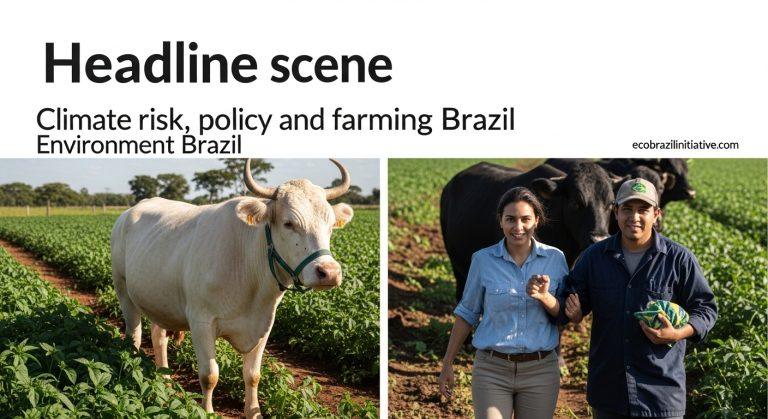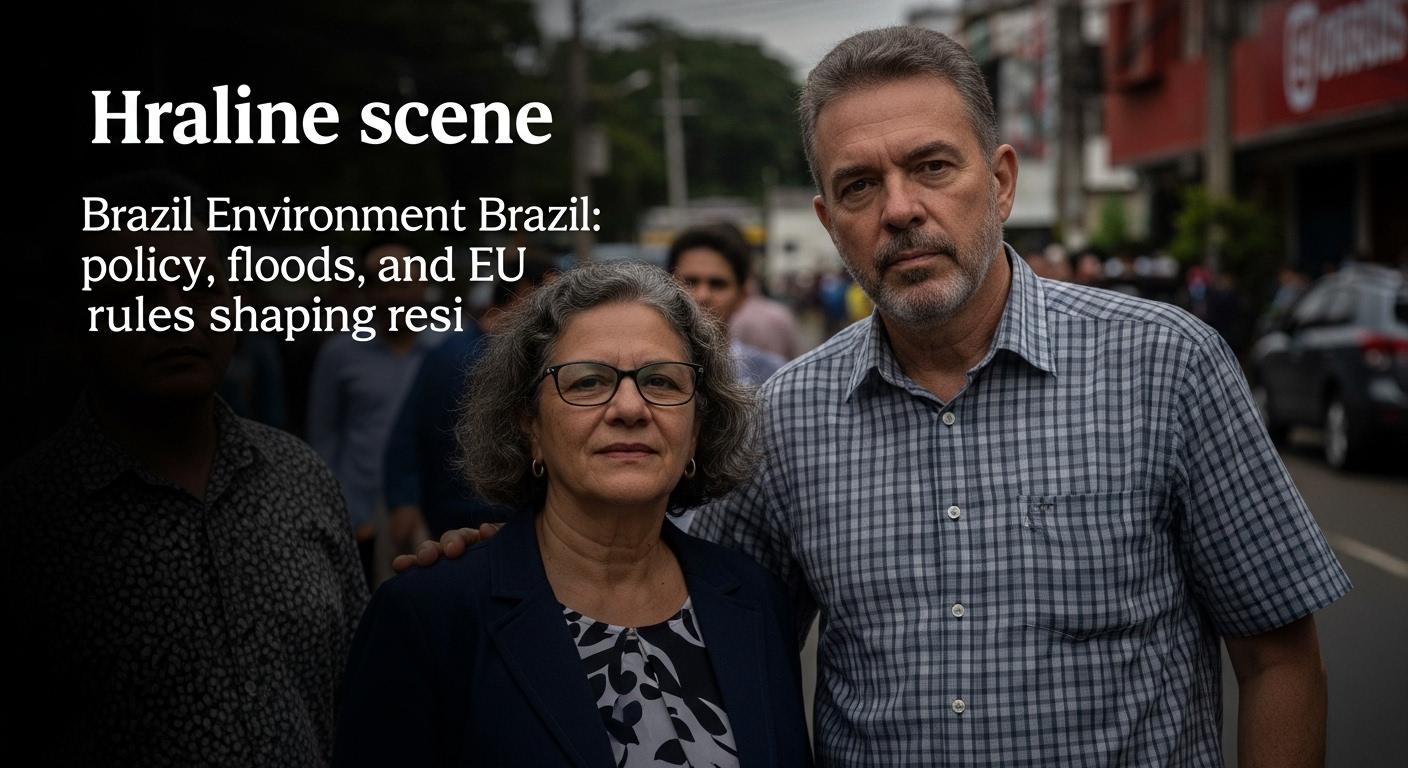
Brazilian rainforest area with river and small farms illustrating environmental resilience and open data initiatives.
Updated: March 16, 2026
Across brazil Environment Brazil, policy-makers, farmers, and urban communities confront a fragile balance between conserving forests, securing livelihoods, and meeting international trade rules. This analysis situates how governance, data, and markets intersect to determine which paths are feasible for sustainable growth in the days ahead.
Regulatory Threads: EUDR and Brazilian Compliance
The European Union’s deforestation due diligence framework, known as the EUDR, is broadening how traders verify that commodities like soy and beef originate from deforestation-free supply chains. In Brazil, a free data platform that leverages government datasets to track EUDR compliance illustrates how transparency can support responsible sourcing at scale. Yet the arrangement also reveals gaps in enforcement, data integration, and the uneven capacity of smallholders to document compliance, underscoring the need for aligned public-private efforts.
Analysts caution that while open-data tools can reduce information asymmetries in global markets, they must be complemented by sound governance, credible auditing, and strong regional coordination to translate compliance into durable conservation outcomes.
Weather Extremes, Economic Pressures, and Local Vulnerabilities
Recent flood events in Brazil, reported with grim clarity, underscore how climate extremes magnify socio-economic vulnerability. Reuters noted a rising death toll, with dozens still missing, underscoring that disaster risk is not abstract: it affects rural livelihoods, urban poor, and food- export-oriented supply chains alike. The floods intersect with land-use changes, drainage infrastructure, and regional development patterns, signaling that adaptation must address both climatic exposure and systemic vulnerabilities in governance, finance, and social protection.
Meanwhile, the agricultural sector faces a dual pressure: shifting consumer and investor expectations for lower environmental footprints, and the imperative to build resilience in supply chains that stretch from farm gates to global markets. In parallel, farmers and cooperatives are experimenting with green initiatives that aim to decarbonize production, improve soil health, and reduce emissions, as reported in industry coverage on Brazil’s soybean sector.
Policy, Markets, and Community Adaptation
Policy design increasingly seeks to align environmental safeguards with market incentives. Open data and transparent traceability can help smallholders access premium markets, while public investment in climate-smart infrastructure can reduce exposure to flooding and drought alike. The dialogue around EUDR readiness intersects with domestic sustainability programs, certification schemes, and finance that incentivize agroforestry, restoration, and precision agriculture. For Brazil, the challenge is to translate regulatory clarity into practical tools for farmers, processors, and exporters, without stifling competitiveness in global value chains.
Media coverage of climate-smart farming initiatives suggests a pathway where market signals reinforce conservation outcomes. When soy farmers adopt green initiatives—such as expanded cover crops, improved nutrient management, and integrated watershed planning—they create a more resilient production profile that can weather policy shifts and climate variability. This alignment of practice and policy is essential for sustaining Brazil’s role in global supply chains while protecting ecological integrity.
Actionable Takeaways
- Policy makers: Invest in interoperable data platforms that connect federal databases with state and municipal records to improve EUDR compliance monitoring, enforcement consistency, and rapid response to non-compliance areas.
- Farmers and cooperatives: Accelerate adoption of climate-smart practices, strengthen traceability, and participate in certification programs that align with EU market expectations and domestic sustainability goals.
- Businesses and researchers: Leverage open data to assess supply-chain risks, map exposure to climate events, and support transparent reporting that satisfies both regulatory regimes and investor demands.
- Civil society and communities: Build local resilience through early warning systems, diversified livelihoods, and community-based restoration to reduce vulnerability to floods and droughts.
Source Context
The following sources informed this analysis and provide background on regulation, climate risk, and practical adaptation in Brazil:
From an editorial perspective, separate confirmed facts from early speculation and revisit assumptions as new verified information appears.
Track official statements, compare independent outlets, and focus on what is confirmed versus what remains under investigation.
For practical decisions, evaluate near-term risk, likely scenarios, and timing before reacting to fast-moving headlines.
Use source quality checks: publication reputation, named attribution, publication time, and consistency across multiple reports.
Cross-check key numbers, proper names, and dates before drawing conclusions; early reporting can shift as agencies, teams, or companies release fuller context.