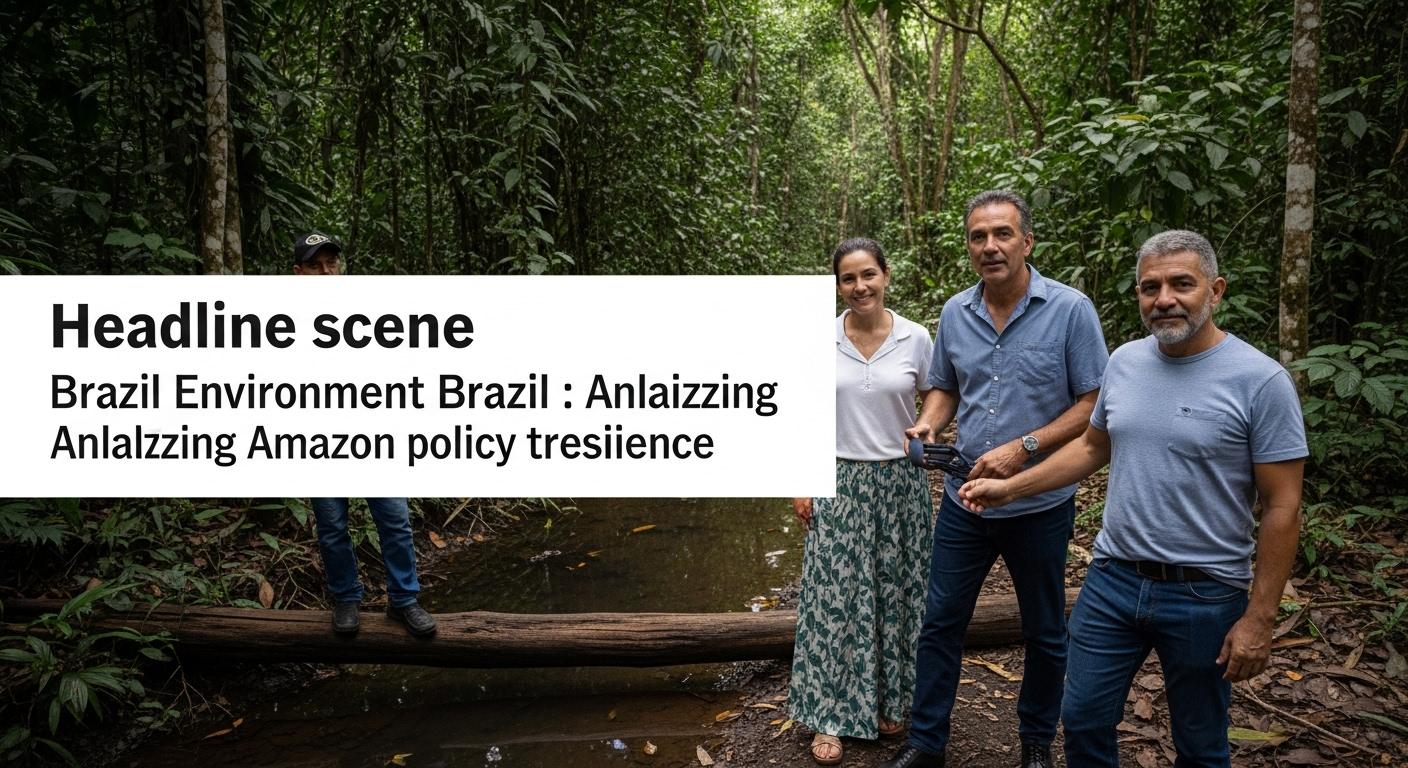
Amazon river network with forest and Indigenous community leaders; policy and environment icons.
Updated: March 16, 2026
From Brasília to the Amazon, what brazil Environment Brazil means in practice is no longer a theoretical debate but a set of real choices about who controls rivers, who bears risk, and how communities adapt to a warming climate. This analysis examines the fault lines exposed by recent policy debates, the signals from forest and river health, and the practical steps that could align environmental protection with local livelihoods in Brazil.
The Context: Policy Shifts and Indigenous Voices
Brazilian policy conversations in recent years have waded into the governance of essential river systems in the Amazon. A notable flashpoint has been attempts to privatize or privatize concessions tied to river use across parts of the basin. Indigenous groups have pressed back against plans that would shift control from public authorities to private interests, arguing that river health and cultural rights depend on community input and consent. When a decree affecting three Amazonian rivers was rolled back following Indigenous protests, observers saw a reminder that policy choices in water governance are not merely technical; they are political, legal, and deeply entwined with local sovereignty. The episode illustrates how rapid policy shifts can unsettle long term planning in areas where communities rely on predictable water access for subsistence, fishing, and small-scale transport.
Environmental Stakes in the Amazon Basin
The Amazon is not only a forest; it is a hydrological engine whose rivers feed vast floodplains, support biodiversity, and power regional livelihoods. Policy debates about river concessions intersect with questions about deforestation, forest fragmentation, and the resilience of fish migrations. When governance frameworks change, so do incentives for monitoring sediment, water quality, and flood risk, all of which influence local food security and urban water supply. Climate pressures compound these challenges by increasing extreme rainfall in some regions while intensifying drought in others, challenging existing infrastructure and emergency response capacities. In this context, decisions about river management should be framed not as short term privatization experiments but as components of a broader strategy to sustain ecological integrity while underpinning rural and Indigenous economies.
Governance, Privatization, and Public Accountability
Public accountability rises to the top when essential resources like river access operate at the intersection of environmental protection and economic interest. The risk in privatization debates is not simply about who pays and who profits; it is about whether safeguards remain robust, whether independent monitoring is funded, and whether communities have meaningful input into decisions that affect their territory. A transparent, rights-based approach would require clear criteria for any concessions, independent environmental impact assessments, and mechanisms for ongoing oversight. The Amazon policy conversation, therefore, is a test case for how Brazil translates climate commitments into enforceable governance that serves both conservation goals and the rights of Indigenous and riverine communities.
Building Resilience: Adaptation, Economy, and Community
Resilience in the Amazon means more than preserving trees; it means supporting livelihoods that do not hinge on single export commodities or risky capital structures. Community-led monitoring, ecologically sustainable livelihoods, and diversified economies can reduce exposure to policy volatility. Investment in flood risk mapping, early warning systems, and collaborative planning among municipalities, states, and Indigenous organizations can improve outcomes when extreme weather events strike. The challenge is to align climate adaptation with economic development so that reforms in water governance strengthen, rather than undermine, local resilience and preserve cultural ties to the land.
Policy Pathways for Sustainable Stewardship
What now matters most is the design of policy pathways that respect Indigenous rights, protect ecological services, and provide transparent economic incentives aligned with long term sustainability. Possible avenues include co management of river basins with multi stakeholder platforms, enhanced environmental data sharing, clear rules for any river concessions, and public investment that links conservation with livelihoods. A pragmatic mix of regulatory guardrails, community participation, and performance-based funding could help Brazil harness the Amazon as a source of climate resilience and sustainable opportunity rather than a frontier of contested access.
Actionable Takeaways
- Ensure that Indigenous communities are consulted in any river governance decision with free, prior, and informed consent.
- Link river use rights to robust environmental impact assessments and independent monitoring.
- Invest in hydrological data collection, flood risk mapping, and shared dashboards across agencies.
- Establish transparent revenue sharing or community benefits from river concessions to support local livelihoods.
- Strengthen interagency coordination on climate resilience, forest protection, and river management.
- Support community led conservation and diversification of livelihoods to reduce policy volatility risk.
Source Context
Contextual anchors and media coverage referenced in this analysis include recent reporting on Amazon river governance and climate impacts.