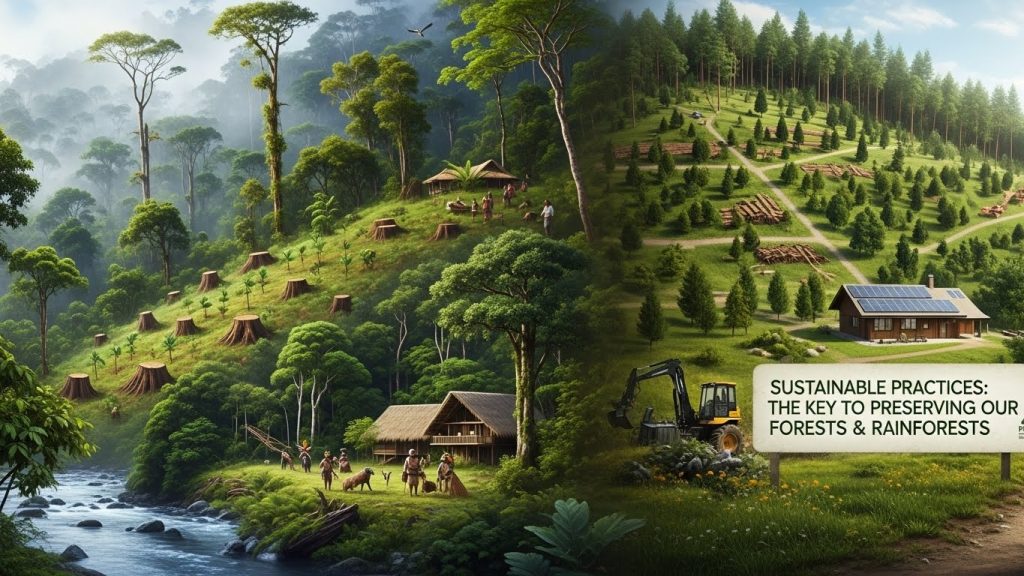
Sustainable Practices: The Key to Preserving our Forests & Rainforests
Forests and rainforests are the planet’s lungs, vital for maintaining biodiversity, regulating climate, and supporting indigenous communities. Yet, they face unprecedented threats from deforestation, climate change, and unsustainable practices. Embracing sustainable practices is crucial for their preservation. This article delves into these practices, offering insights into how they can safeguard our forests and rainforests for future generations.
The Importance of Forests and Rainforests
Forests cover about 31% of the world’s land area, providing habitat for a vast array of species. Rainforests, in particular, are home to over half of the world’s plant and animal species, despite covering only 6% of the Earth’s surface. These ecosystems play a critical role in carbon sequestration, helping to mitigate climate change by absorbing carbon dioxide from the atmosphere.
Moreover, forests provide essential resources such as timber, medicine, and food, and are a source of livelihood for millions of people worldwide. They also protect watersheds, preventing soil erosion and maintaining water cycles. Given these benefits, the need to preserve these natural treasures is more urgent than ever.
Understanding the Threats to Forests and Rainforests
The threats to forests and rainforests are multifaceted. Deforestation is perhaps the most immediate threat, driven by logging, agriculture, and infrastructure development. This not only destroys habitats but also contributes to climate change by releasing stored carbon dioxide.
Climate change itself poses a significant threat, altering weather patterns and affecting the health and distribution of forests. Invasive species, pollution, and land conversion further exacerbate these challenges, putting immense pressure on these ecosystems.
Embracing Sustainable Forestry Practices

Sustainable forestry practices are essential for balancing the demand for forest resources with the need to maintain ecosystem health. One such practice is selective logging, which involves harvesting only certain trees while preserving the overall forest structure. This approach minimizes environmental impact and allows for natural regeneration.
Another effective method is the use of Reduced Impact Logging (RIL) techniques. These involve careful planning and execution of logging activities to reduce damage to surrounding trees and soil. RIL not only helps maintain biodiversity but also supports the livelihoods of local communities by ensuring a continuous supply of forest products.
Community-Based Conservation Efforts
Indigenous and local communities have long-standing relationships with their forests, making them invaluable partners in conservation efforts. Community-based conservation empowers these groups to manage their natural resources sustainably, drawing on traditional ecological knowledge.
One successful example is the Rainforest Alliance certification, which promotes sustainable agriculture and forestry practices. By supporting certified products, consumers can contribute to the preservation of forests and the well-being of local communities.
The Role of Technology in Forest Conservation
Technology plays a pivotal role in modern conservation efforts, offering innovative solutions to monitor and protect forests. Satellite imagery and drones provide real-time data on deforestation and forest health, enabling quick response to illegal activities.
Additionally, Geographic Information Systems (GIS) facilitate the mapping of forest resources and the identification of critical conservation areas. These tools not only enhance monitoring but also support the planning and implementation of sustainable management strategies.
Policy and Legal Frameworks Supporting Sustainable Practices
Effective policies and legal frameworks are crucial for promoting sustainable forest management. International agreements such as the Convention on Biological Diversity set targets for the conservation and sustainable use of biodiversity, providing a framework for national legislation.
At the national level, laws and regulations can incentivize sustainable practices through mechanisms such as payments for ecosystem services (PES) or tax benefits for certified products. These measures encourage businesses and individuals to adopt environmentally friendly practices.
Consumer Choices and Their Impact on Forests
Consumers wield significant power in the fight to preserve forests through their purchasing decisions. By choosing sustainably sourced products, individuals can drive demand for responsible forestry and agriculture, influencing industry practices.
Labels such as Forest Stewardship Council (FSC) certification help consumers identify products that meet rigorous environmental and social standards. Supporting such initiatives not only aids conservation efforts but also promotes fair trade and ethical business practices.
Education and Awareness as Catalysts for Change
Educating the public about the importance of forests and the threats they face is crucial for fostering a culture of conservation. Environmental education programs can raise awareness and inspire action, encouraging individuals to adopt sustainable behaviors.
Furthermore, initiatives like the Earth Day Network bring global attention to environmental issues, mobilizing millions of people to participate in conservation activities. Such efforts highlight the interconnectedness of human and environmental health.
Challenges and Future Directions
Despite significant progress, challenges remain in the quest for sustainable forest management. Balancing economic development with conservation, addressing illegal logging, and mitigating the impacts of climate change require coordinated global efforts.
Future strategies must integrate scientific research, traditional knowledge, and innovative technologies to build resilient forest ecosystems. Collaborative approaches involving governments, businesses, and communities are essential for creating sustainable solutions that benefit both people and the planet.
Takeaways
Preserving our forests and rainforests is not just an environmental imperative; it is a necessity for human survival. By embracing sustainable practices, we can safeguard these vital ecosystems and ensure their benefits endure for generations to come. From sustainable forestry and community-based conservation to technological innovations and informed consumer choices, every action counts in the pursuit of a greener, healthier planet.
The journey toward sustainability is ongoing, requiring commitment and collaboration at all levels. By continuing to educate ourselves and others, supporting sustainable initiatives, and advocating for strong policies, we can make a meaningful impact in preserving the natural world that sustains us all.
Innovative Approaches to Forest Restoration
Restoration of degraded forests is an essential component of sustainable forest management. Innovative approaches to reforestation and afforestation are gaining traction as effective means to restore ecological balance and enhance biodiversity. Utilizing native species in reforestation efforts ensures that the restored ecosystem mirrors the natural composition of the area, promoting resilience against pests and diseases.
Agroforestry, a practice that integrates trees with crops and livestock, is another promising approach. This technique not only contributes to soil fertility and biodiversity but also provides economic benefits to farmers. By incorporating trees into agricultural landscapes, communities can diversify their income sources while contributing to carbon sequestration efforts.
Corporate Responsibility and Sustainable Practices
Corporations play a significant role in forest conservation efforts. By adopting sustainable business practices, companies can reduce their environmental footprint and contribute positively to forest preservation. Initiatives such as zero-deforestation commitments and sustainable supply chain management are critical in ensuring that corporate activities do not contribute to deforestation.
Many companies are now investing in reforestation projects as part of their corporate social responsibility programs. These projects not only help offset carbon emissions but also enhance the company’s reputation and consumer trust. Collaborations between businesses, governments, and non-governmental organizations are vital for scaling up these efforts and achieving significant conservation outcomes.
The Economic Benefits of Sustainable Forestry
While the environmental and social benefits of sustainable forestry are well-documented, the economic advantages are equally compelling. Sustainable forestry practices can enhance the long-term productivity of forest resources, ensuring a stable supply of timber and non-timber products. This stability can lead to job creation and economic growth in rural communities.
Moreover, sustainable forestry can attract investment and funding from green finance initiatives. Financial institutions are increasingly recognizing the value of investing in sustainable projects, providing opportunities for forest-based enterprises to access capital. By aligning economic incentives with conservation goals, sustainable forestry can contribute to both environmental preservation and economic prosperity.
The Role of International Cooperation in Forest Conservation
International cooperation is crucial for addressing the global challenges facing forests and rainforests. Multilateral agreements and partnerships facilitate the sharing of knowledge, resources, and technology, enabling countries to implement effective conservation strategies. Initiatives like the UN-REDD Programme support developing countries in their efforts to reduce emissions from deforestation and forest degradation.
Collaborative efforts also include transboundary conservation projects, which focus on preserving ecosystems that span multiple countries. These projects require coordination and collaboration among governments, communities, and conservation organizations to ensure the protection of shared natural resources.
Empowering Future Generations for Sustainable Forest Management
As we look to the future, empowering young people to become stewards of the environment is critical for ensuring the longevity of sustainable forest management. Environmental education programs in schools and communities can instill a sense of responsibility and stewardship in young individuals, equipping them with the knowledge and skills necessary to tackle environmental challenges.
Youth-led initiatives and organizations are already making significant contributions to conservation efforts, advocating for policy changes, and raising awareness about the importance of forests. By supporting these initiatives and providing platforms for young voices, we can inspire a new generation of environmental leaders committed to preserving our planet’s natural heritage.
Conclusion: A Call to Action
Preserving our forests and rainforests is a shared responsibility that requires collective action and commitment from all sectors of society. By embracing sustainable practices, we can protect these vital ecosystems and ensure their benefits endure for generations to come. Whether through individual actions, corporate responsibility, or international cooperation, every effort counts in the pursuit of a sustainable future.
The path to sustainability is not without challenges, but the rewards of a healthy, thriving planet are well worth the effort. Together, we can create a world where forests and rainforests continue to flourish, providing essential services, supporting biodiversity, and contributing to the overall well-being of our planet. Let us take this opportunity to act decisively and work collaboratively to preserve the natural world that sustains us all.
About the Author