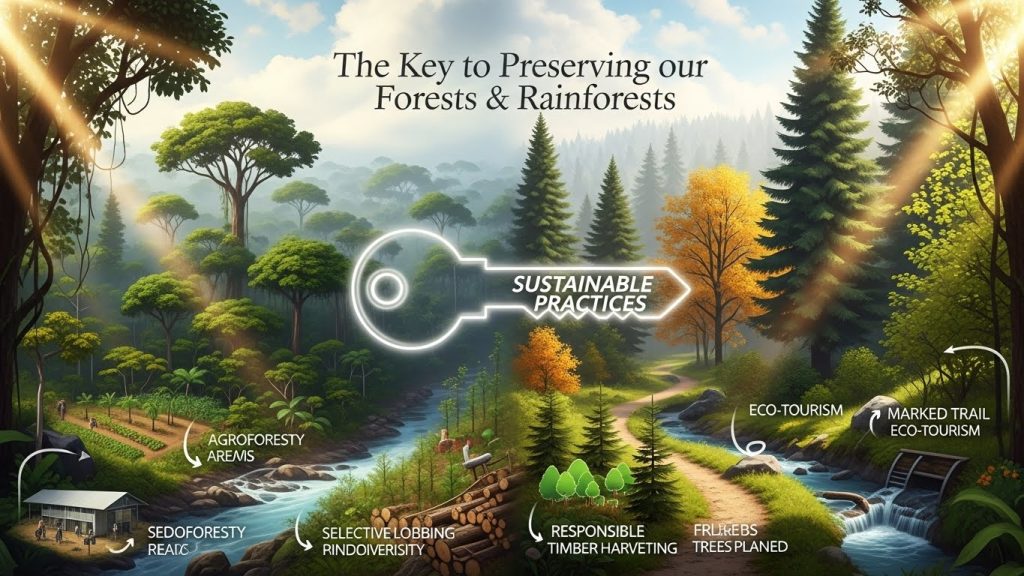
Sustainable Practices: The Key to Preserving our Forests & Rainforests
Forests and rainforests are vital to the ecological balance of our planet. They are home to a diverse range of flora and fauna, provide oxygen, and play a crucial role in the global carbon cycle. However, deforestation and unsustainable practices threaten these critical ecosystems. In this blog post, we will explore sustainable practices that can help preserve our forests and rainforests for future generations.
Understanding the Importance of Forests and Rainforests
Forests cover about 31% of the Earth’s land area, providing habitat for over 80% of terrestrial species. Rainforests, in particular, are incredibly biodiverse, with just one hectare containing more species than all of Europe. These ecosystems are essential for biodiversity conservation, climate regulation, and supporting the livelihoods of over a billion people worldwide.
Deforestation: A Major Threat
Deforestation is a significant threat to forests and rainforests. It is driven by agriculture, logging, mining, and urban expansion. This loss of forest cover results in habitat destruction, biodiversity loss, and contributes to climate change. To combat deforestation, sustainable practices must be adopted at local, national, and global levels.
Sustainable Forestry Management
Sustainable forestry management ensures that forest resources are used in a way that meets the needs of the present without compromising the ability of future generations to meet their own needs. This involves maintaining forest ecosystems, protecting biodiversity, and supporting the local communities that depend on forests. Certification systems like the Forest Stewardship Council (FSC) provide guidelines and standards for sustainable forestry practices.
Selective Logging
Selective logging is a sustainable practice that involves carefully choosing which trees to harvest, allowing the forest to regenerate naturally. This method minimizes environmental impact, maintains biodiversity, and ensures that forests can continue to provide resources in the future.

Agroforestry
Agroforestry combines agriculture and forestry techniques to create more sustainable land-use systems. By integrating trees with crops and livestock, agroforestry enhances biodiversity, improves soil quality, and increases carbon sequestration. This practice benefits farmers by diversifying income sources and improving resilience to climate change.
Community-Based Conservation
Empowering local communities to manage and protect their forests is a key component of sustainable conservation efforts. Community-based conservation involves local people in decision-making processes and provides them with the resources needed to manage their natural resources sustainably. Programs like Conservation International support community-led initiatives, ensuring that conservation efforts are culturally relevant and effective.
The Role of Technology in Sustainable Forestry
Technology plays a vital role in advancing sustainable forestry practices. Remote sensing and satellite imagery provide real-time data on forest cover and health, allowing for better monitoring and management. Drones are used for reforestation efforts and poacher detection, while blockchain technology ensures transparency and traceability in forest product supply chains.
Policy and Legislation
Effective policies and legislation are crucial for promoting sustainable practices in forestry. Governments must enforce laws that prevent illegal logging, promote reforestation, and support sustainable land use. International agreements like the Convention on Biological Diversity (CBD) and the Paris Agreement provide frameworks for global cooperation in forest conservation.
Corporate Responsibility and Sustainable Sourcing
Companies have a significant impact on forests through their supply chains. By adopting sustainable sourcing practices, businesses can reduce their environmental footprint and promote forest conservation. This includes using certified sustainable wood products, reducing packaging waste, and supporting reforestation projects. Initiatives like the Global Forest Watch help companies track their supply chain impacts and improve sustainability.
Individual Actions to Support Forest Conservation
Individuals can play a role in preserving forests and rainforests by making conscious choices in their daily lives. Reducing paper and wood consumption, supporting sustainable brands, and advocating for forest conservation policies are all ways to contribute. Additionally, individuals can participate in tree planting campaigns and support organizations dedicated to forest conservation.
Takeaways
Preserving our forests and rainforests is essential for maintaining ecological balance, protecting biodiversity, and combating climate change. Sustainable practices, from forestry management to community-based conservation, offer pathways to achieve these goals. By working together—governments, businesses, communities, and individuals—we can ensure that these vital ecosystems continue to thrive for generations to come.
Financial Incentives for Sustainable Practices
Financial incentives can be a powerful tool in promoting sustainable forestry practices. These incentives encourage landowners and businesses to adopt environmentally friendly methods by providing economic benefits. Examples include tax breaks for sustainable land management, subsidies for reforestation projects, and payments for ecosystem services such as carbon sequestration.
Payments for Ecosystem Services (PES)
Payments for Ecosystem Services (PES) are financial mechanisms that reward individuals or communities for maintaining or enhancing ecosystem services. In the context of forestry, PES programs might pay landowners to preserve forest cover, enhance biodiversity, or improve water quality. These programs not only incentivize conservation but also provide economic support to communities that rely on forest resources.
Education and Awareness
Raising awareness about the importance of forests and the threats they face is crucial for fostering a culture of conservation. Educational programs, workshops, and media campaigns can help inform the public and encourage environmentally responsible behavior. Schools and universities play a role by integrating environmental education into their curricula, fostering a new generation of conservation-minded individuals.
Engaging the Next Generation
Engaging young people in forest conservation is vital for long-term sustainability. Programs like tree planting events, forest conservation camps, and youth-led environmental initiatives can inspire a sense of stewardship and responsibility towards natural resources. By involving youth in hands-on conservation activities, we can cultivate their interest in environmental careers and advocacy.
International Cooperation and Collaboration
Forests and rainforests are global resources that require international cooperation to protect. Collaborative efforts between countries can help address cross-border issues such as illegal logging and wildlife trafficking. Organizations like the UN-REDD Programme work to support countries in developing and implementing strategies for reducing emissions from deforestation and forest degradation.
Transboundary Conservation Areas
Transboundary conservation areas are regions that span multiple countries and are managed collaboratively for conservation purposes. These areas promote biodiversity conservation across borders and facilitate cooperation between governments and organizations. By working together, countries can address shared challenges and achieve more effective conservation outcomes.
The Future of Forest Conservation
The future of forest conservation depends on our ability to integrate sustainable practices into all aspects of forestry and land management. By embracing innovative technologies, fostering community involvement, and building strong policy frameworks, we can create a more sustainable future for our forests and rainforests.
Innovative Solutions for a Sustainable Future
Innovation is key to overcoming the challenges faced by forests and rainforests. From developing new tree-planting techniques to creating sustainable alternatives to timber products, research and innovation can drive progress in forest conservation. Collaborative efforts between scientists, policymakers, and industry leaders will be essential for developing and implementing these solutions.
Conclusion: A Call to Action
Preserving our forests and rainforests is not just an environmental imperative—it is a moral one. These ecosystems are crucial for the health of our planet and the well-being of millions of species, including humans. By adopting sustainable practices and working together, we can ensure that forests continue to provide their invaluable services for generations to come. Let us take action now to protect our forests and rainforests, for the sake of our planet and future generations.
Empowering Indigenous Communities
Indigenous communities have lived in harmony with forests and rainforests for centuries, often possessing extensive knowledge about sustainable land management. Empowering these communities to manage their lands can lead to more effective conservation outcomes. Recognizing their land rights and incorporating traditional ecological knowledge into conservation strategies are key steps toward sustainable forest management.
Integrating Traditional Ecological Knowledge
Traditional ecological knowledge (TEK) refers to the understanding and insights held by indigenous peoples regarding the ecosystems they inhabit. This knowledge can complement scientific research, offering valuable perspectives on sustainable resource management. By integrating TEK into conservation efforts, we can develop more holistic and culturally appropriate strategies for preserving forests and rainforests.
Balancing Economic Development and Conservation
Economic development and forest conservation are often seen as conflicting goals. However, it is possible to balance both by adopting sustainable development practices. Sustainable ecotourism, for example, can provide economic benefits to local communities while promoting conservation. By investing in green infrastructure and sustainable industries, we can support economic growth without compromising the health of our forests.
Sustainable Ecotourism
Sustainable ecotourism focuses on responsible travel to natural areas, conserving the environment, and improving the well-being of local people. It encourages travelers to appreciate the beauty and biodiversity of forests and rainforests while minimizing their environmental impact. Well-managed ecotourism can generate income for conservation projects and provide employment opportunities for local residents.
Research and Monitoring
Ongoing research and monitoring are essential for understanding the health and dynamics of forest ecosystems. By studying forest structure, species composition, and ecological processes, researchers can identify changes and threats to these ecosystems. Monitoring programs help track the effectiveness of conservation interventions and guide adaptive management strategies.
Citizen Science Initiatives
Citizen science initiatives engage the public in data collection and research efforts, expanding the reach and impact of scientific studies. By participating in activities like tree mapping, wildlife surveys, and habitat monitoring, citizens can contribute valuable data to conservation efforts. These initiatives also raise awareness and foster a sense of connection to natural environments.
Final Thoughts
As we continue to face environmental challenges, the importance of sustainable practices in forest and rainforest conservation cannot be overstated. By adopting a multifaceted approach that includes policy reform, community involvement, technological innovation, and education, we can protect these vital ecosystems. It is our collective responsibility to ensure the longevity and health of our forests, securing a sustainable future for the planet and its inhabitants.
To learn more about sustainable forest management and conservation efforts, consider exploring resources provided by organizations such as the International Union for Conservation of Nature (IUCN) and the Rainforest Alliance. By staying informed and taking action, we can all contribute to the preservation of our world’s invaluable forest resources.
About the Author