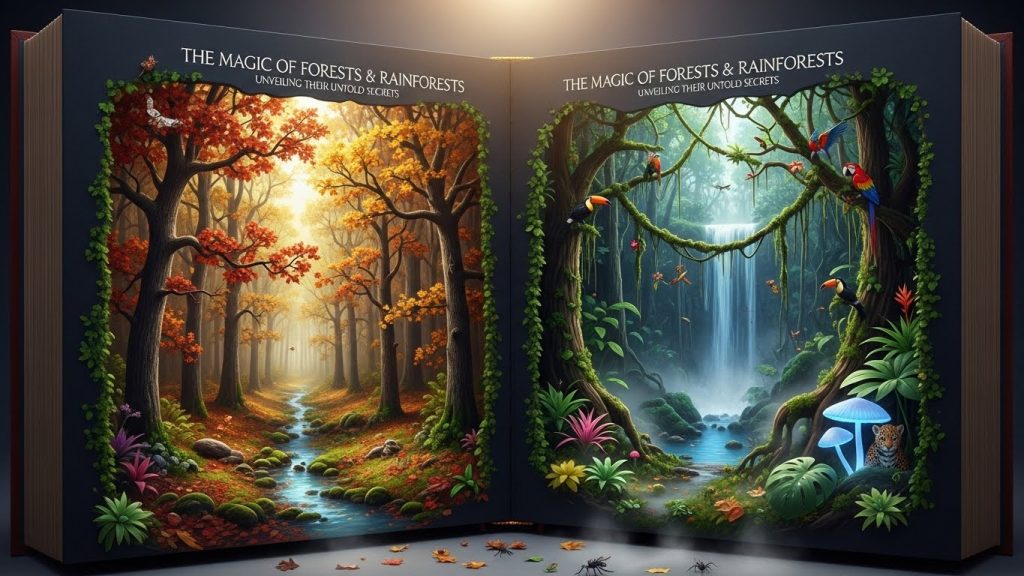
The Magic of Forests & Rainforests: Unveiling Their Untold Secrets
Forests and rainforests, often described as the lungs of the Earth, are teeming with life and mystery. These verdant landscapes are not only vital for our planet’s health but are also rich in untapped secrets and wonders. From the towering canopies of the Amazon to the diverse ecosystems within temperate forests, these natural wonders hold many stories waiting to be told. In this blog post, we will explore the myriad aspects of forests and rainforests, shedding light on their critical roles, unique biodiversity, and the hidden gems they harbor.
The Importance of Forests and Rainforests
Forests and rainforests play a crucial role in maintaining the ecological balance of our planet. They act as carbon sinks, absorbing a significant portion of carbon dioxide emissions, which helps mitigate climate change. According to the World Wildlife Fund, forests cover about 31% of the global land area, providing habitats for countless species of flora and fauna.
In addition to their role in carbon sequestration, forests are also critical in regulating the Earth’s climate by influencing weather patterns and water cycles. The Amazon rainforest, often dubbed the “world’s largest tropical rainforest,” significantly impacts the global climate by releasing water vapor into the atmosphere, which contributes to rainfall patterns across continents.
Biodiversity: The Heart of Forest Ecosystems
Forests are home to an astonishing array of biodiversity. The complex web of life found in these ecosystems includes everything from microscopic fungi to massive mammals. Rainforests, in particular, are hotspots of biodiversity, harboring more species than any other terrestrial habitat.
For example, the Amazon rainforest alone is home to about 10% of the known species on Earth, including iconic creatures like jaguars, sloths, and countless insects. The Conservation International emphasizes the importance of preserving these habitats to protect the myriad species that rely on them.

The Unique Flora and Fauna of Rainforests
The flora and fauna of rainforests are incredibly diverse and adapted to the unique conditions of their environment. The dense canopy layer, which can reach heights of over 30 meters, is where much of the rainforest’s biodiversity resides. This layer is home to a variety of plant species, many of which possess medicinal properties still undiscovered by science.
Animals in rainforests have evolved remarkable adaptations to thrive in their environment. For example, the poison dart frog’s vibrant colors serve as a warning to predators about its toxicity. Similarly, the sloth’s slow movement and algae-covered fur provide excellent camouflage against predators. These unique adaptations highlight the intricate balance of life within rainforests.
The Cultural Significance of Forests
Forests have been revered and respected by indigenous communities for centuries. These natural landscapes are not only sources of sustenance and shelter but also hold spiritual significance. Many indigenous cultures see forests as sacred spaces, imbued with spirits and deities that protect and guide them.
The traditional knowledge held by indigenous peoples about their forest environments is invaluable. Their practices often involve sustainable methods of harvesting resources that ensure the long-term health of the ecosystem. Organizations like the Rainforest Alliance work to support these communities in their efforts to conserve their native forests.
Threats Facing Forests and Rainforests
Despite their importance, forests and rainforests face numerous threats. Deforestation, driven by agricultural expansion, logging, and infrastructure development, continues to be one of the most significant challenges. This not only results in the loss of biodiversity but also contributes to climate change by releasing stored carbon dioxide into the atmosphere.
Illegal wildlife trade and mining are other significant threats that jeopardize the delicate balance of these ecosystems. As highlighted by the Global Forest Watch, monitoring forest health and implementing effective conservation strategies are crucial in addressing these challenges.
Conservation Efforts and Sustainable Practices
Efforts to conserve forests and rainforests are underway worldwide. Protected areas and national parks have been established to safeguard these vital ecosystems. International agreements, such as the Paris Agreement, aim to reduce deforestation and promote sustainable land management practices.
Sustainable forestry practices, including selective logging and agroforestry, are being implemented to balance human needs with environmental protection. These practices ensure that forests continue to provide resources without compromising their ecological integrity.
Education and awareness campaigns are also critical in promoting conservation efforts. By fostering a deeper understanding of the importance of forests, individuals and communities are more likely to engage in actions that support their preservation.
The Future of Forests and Rainforests
The future of forests and rainforests depends on our actions today. By prioritizing conservation efforts, adopting sustainable practices, and supporting indigenous communities, we can ensure that these magical ecosystems continue to thrive.
Technological advancements, such as satellite monitoring and drone technology, offer new ways to track changes in forest cover and biodiversity. These tools can help inform policy decisions and improve conservation strategies.
Moreover, the involvement of local communities in conservation efforts is crucial. Empowering these communities with resources and knowledge allows them to take an active role in preserving their natural heritage.
Takeaways
The magic of forests and rainforests lies not only in their breathtaking beauty and biodiversity but also in their vital role in sustaining life on Earth. Unveiling the untold secrets of these ecosystems reveals their immense value and the urgent need to protect them.
As we continue to explore and understand the complex dynamics of forests and rainforests, let us be reminded of our shared responsibility to preserve these natural wonders for future generations. Only through collective efforts can we unlock the full potential of forests and rainforests, ensuring their survival and the well-being of our planet.
The ongoing battle to protect forests and rainforests requires a multifaceted approach that encompasses both local and global efforts. One promising avenue is the promotion of eco-tourism, which can provide economic incentives for conservation. By visiting these natural wonders responsibly, tourists contribute to local economies while raising awareness about the importance of preserving these ecosystems.
Additionally, reforestation and afforestation projects are gaining traction as effective strategies for restoring degraded lands. These initiatives not only help recover lost biodiversity but also enhance carbon sequestration capabilities. For instance, the Great Green Wall initiative in Africa aims to restore 100 million hectares of land across the continent, transforming lives and landscapes in the process.
Corporate responsibility and consumer choices also play a significant role in forest conservation. By supporting companies that practice sustainable sourcing and production, consumers can drive demand for environmentally friendly products. Certifications like the Forest Stewardship Council (FSC) label help consumers identify products that meet rigorous environmental and social standards.
Furthermore, integrating forest conservation into climate policy is essential. Forests must be recognized as critical components in the fight against climate change, and policies should incentivize their protection and restoration. By aligning conservation goals with climate action plans, governments can create a cohesive strategy that addresses both environmental and economic concerns.
Technological innovations are transforming how we monitor and manage forests. Satellite imagery and machine learning algorithms enable real-time tracking of deforestation and forest health. These technologies provide invaluable data for researchers and policymakers, allowing for more informed decision-making and effective interventions.
Engaging youth and the next generation in forest conservation is vital for long-term success. Educational programs that focus on environmental stewardship can inspire young people to become advocates for forests and rainforests. Initiatives like school-based tree planting projects and environmental clubs foster a sense of responsibility and connection to nature among students.
Ultimately, the magic of forests and rainforests lies in their ability to inspire awe and wonder. These ecosystems are living libraries, holding the secrets of evolution, adaptation, and resilience. By preserving them, we not only safeguard biodiversity but also ensure that future generations can experience the myriad wonders of the natural world.
In conclusion, the untold secrets of forests and rainforests are waiting to be discovered and cherished. As we continue to uncover their mysteries, let us commit to protecting these invaluable ecosystems. Through collective action, innovation, and education, we can ensure that the magic of forests and rainforests endures, enriching our world and nurturing our planet for generations to come.
As we delve deeper into the strategies for forest and rainforest preservation, it’s crucial to highlight the role of international collaboration. Countries must work together to establish transboundary conservation areas, which protect ecosystems that extend beyond national borders. This collaborative approach ensures the protection of entire ecosystems rather than fragmented habitats, promoting greater ecological stability and resilience.
One of the most compelling examples of transboundary conservation is the Kavango-Zambezi Transfrontier Conservation Area in Southern Africa. Spanning five countries, this initiative aims to harmonize conservation efforts across borders, creating a vast protected area that supports both wildlife and local communities. Such models exemplify the power of unity in addressing global environmental challenges.
A critical aspect of forest conservation is addressing the underlying drivers of deforestation. Poverty, lack of education, and insufficient resources often force communities to exploit forests unsustainably. By investing in rural development and providing alternative livelihoods, we can reduce the dependency on forest resources and promote sustainable practices.
Moreover, the intersection of gender and forest conservation is gaining recognition as a vital component of effective environmental management. Women, especially in rural communities, are often key players in resource management and conservation efforts. Empowering women through education, leadership opportunities, and access to resources can lead to more successful and inclusive conservation outcomes.
Alongside human efforts, the intrinsic resilience of forests and rainforests should not be underestimated. These ecosystems have evolved over millions of years, developing intricate relationships and feedback mechanisms that enable them to withstand and recover from disturbances. Protecting these natural processes and allowing forests to regenerate naturally can be more effective than human intervention in some cases.
Scientific research continues to uncover new insights into the functions and benefits of forests and rainforests. Breakthroughs in understanding the microbiomes of forest soils, for example, reveal the critical role of fungi and bacteria in nutrient cycling and plant health. Such discoveries highlight the complexity of forest ecosystems and the need for holistic approaches to their conservation.
In the realm of policy and governance, integrating forest conservation into national development plans is essential. Policymakers must recognize the multifaceted value of forests, which extends beyond their economic contributions to include their ecological, cultural, and recreational benefits. By aligning forest conservation with broader development goals, countries can create policies that ensure sustainable growth while preserving natural resources.
The narrative of forests and rainforests is one of both challenge and hope. While the threats they face are daunting, the collective efforts of individuals, communities, governments, and organizations worldwide offer a path toward a more sustainable future. As we continue to explore and understand these magnificent natural landscapes, let us be inspired to cherish and protect them for the benefit of all life on Earth.
About the Author