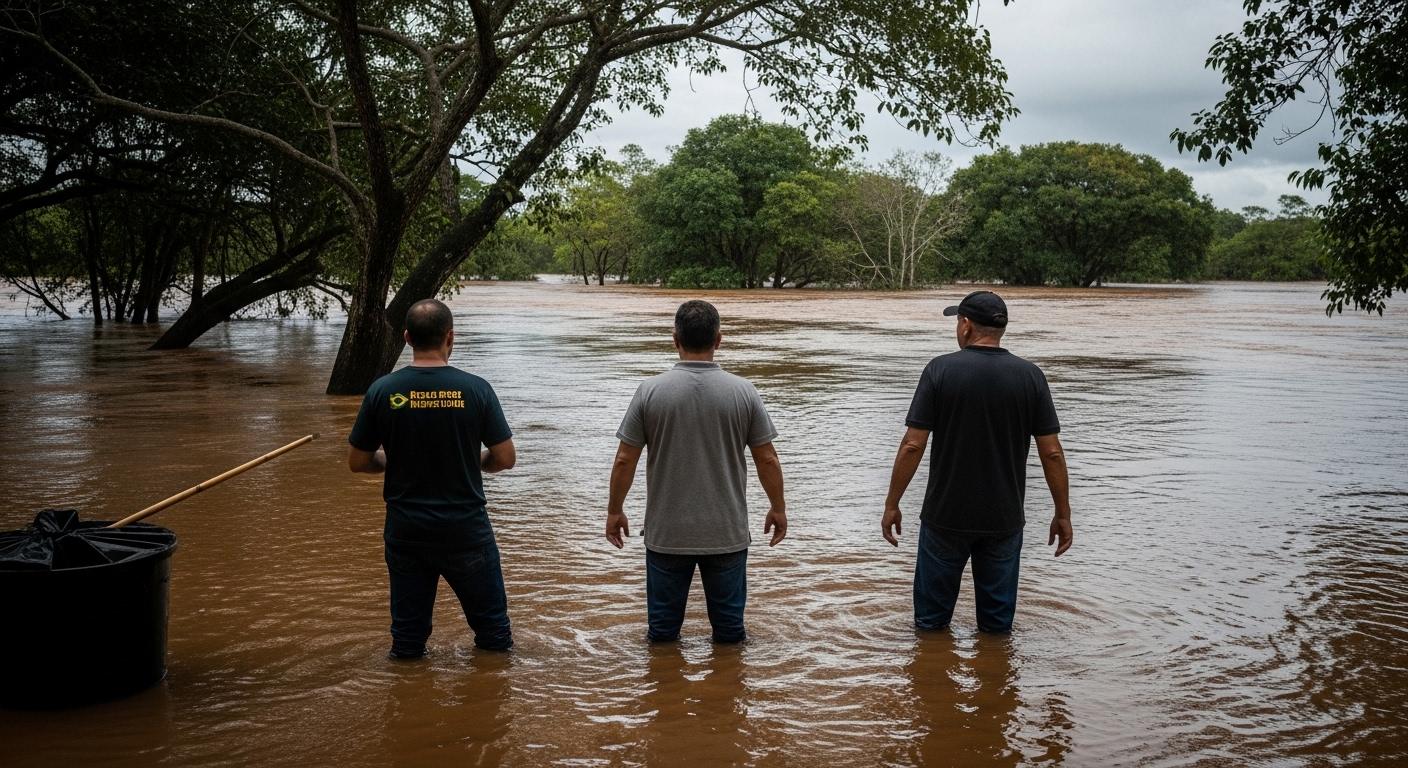
Aerial view of Amazon rivers during floods with Indigenous communities nearby.
Updated: March 16, 2026
brazil’s Environment Brazil stands at a turning point as extreme rainfall, flood surges, and land-use change press communities, businesses, and policymakers into the same frame. In the past year, climate shocks have sharpened scrutiny of governance and the resilience of both urban and rural ecosystems. This analysis traces how policy choices, market dynamics, and civil society interact to shape Brazil’s climate security, and what that means for households and ecosystems across the country.
Policy crossroads: Lula era, enforcement, and the enforcement budget
Brazil’s environmental policy now sits at a crossroads between growth objectives—mining, agribusiness, infrastructure—and the need to reduce deforestation, restore protected areas, and strengthen inspections. Advocates say recent budget allocations aimed at environmental agencies signal a re-commitment to enforcement and monitoring, while critics warn that legal and bureaucratic hurdles still hamper swift action on illegal logging and land grabs. The tension is pragmatic: how to align short-term development with long-term ecological thresholds that underpin rural livelihoods and city resilience.
Policy design now must grapple with interagency coordination, data-sharing across municipalities, and the political economy of land use in the Amazon and the Cerrado. The question is not only what gets inspected, but how communities can participate in audits and how independent reporting can reach the public in real time. Without stronger public access to environmental data and credible enforcement timelines, policy signals risk remaining aspirational rather than transformative.
Climate risk, urban planning, and the flood nexus
Climate projections point to more intense rainfall concentrated in shorter intervals. In major urban centers, aging drainage systems, informal settlements, and limited land-use planning compound the vulnerability of residents who live in flood-prone neighborhoods. The interplay between cloudbursts and urban geometry means that a single storm can overwhelm streets, schools, and clinics, disrupting livelihoods for days or weeks. Municipalities face a dual challenge: building resilience with limited fiscal space while ensuring that redevelopment does not simply relocate risk to other neighborhoods or downstream river basins.
Public resilience hinges on integrating climate risk into everyday decision-making—construction permits, road maintenance, and school siting—and on strengthening early-warning systems that can trigger swift, targeted relief. In this sense, climate adaptation is not a luxury; it is a prerequisite for economic continuity in industries as diverse as logistics, agriculture, and tourism, which together anchor local and regional markets across Brazil.
Deforestation, agriculture, and regional spillovers
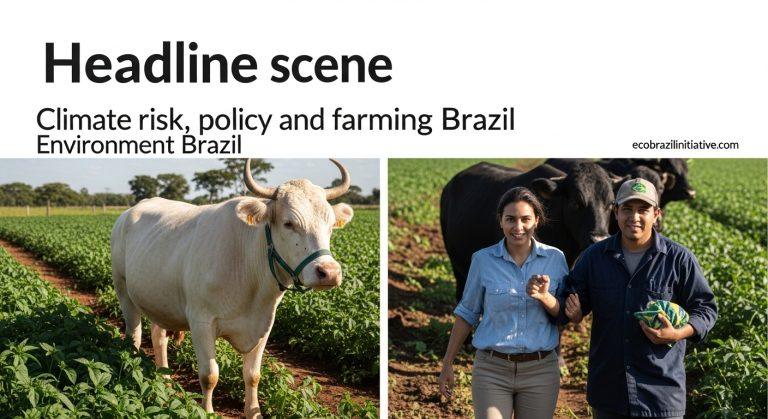
The pressures on land use are not isolated phenomena. Deforestation in the Amazon and adjacent biomes exerts regional and even hemispheric effects on rainfall, water cycles, and soil stability. Researchers emphasize that protecting forest carbon stocks and watershed integrity can preserve rainfall patterns that sustain farmlands, ranches, and smallholder networks inland. At the same time, agricultural expansion—soy, cattle, and timber—dies not only threaten biodiversity but also elevates the risk of fires, soil degradation, and degraded streams that feed urban water supplies. The policy tension here centers on how to balance export-driven growth with ecological thresholds that underpin both climate stability and food security.
Regional spillovers are a practical reality: when forest cover recedes, downstream communities experience altered water availability, more frequent flood peaks, and higher sediment loads in rivers. These outcomes complicate disaster planning and increase the cost of resilience for municipalities already stretched by demand for social services. A robust response requires cross-border cooperation among states, transparent supply-chain information for major commodity traders, and incentives for land stewardship that align private profit with public risk reduction.
Actionable Takeaways
- Strengthen disaster risk financing and rapid-response infrastructure upgrades, prioritizing flood-prone corridors and vulnerable urban peripheries.
- Tie environmental licensing to measurable performance indicators in deforestation control, water quality, and biodiversity protection, with clear timelines and public reporting.
- Promote sustainable agricultural practices through incentives, certification schemes, and transparent commodity tracing to reduce deforestation pressures.
- Enhance data transparency and citizen participation in environmental monitoring, including open dashboards that track permits, emissions, and enforcement actions.
- Invest in nature-based solutions—reforestation, watershed restoration, and green infrastructure—that deliver co-benefits for climate resilience, livelihoods, and urban livability.
Source Context
These considerations are informed by ongoing coverage of Brazil’s climate adaptation and governance debates, including notable discussions around leadership responses to flood events and broader environmental pressures. See the following materials for additional context:
Lula visits flood zone coverage
This Everyday Fruit Is Still Showing Traces of a 2015 Environmental Disaster
Nigeria’s Strategic Pivot to South America’s Economic Giant, Brazil
These links help frame the broader context in which Brazil’s Environment policy must operate: environmental governance, exposure to climate hazards, and the interplay of domestic and international factors that shape resilience outcomes across the country.