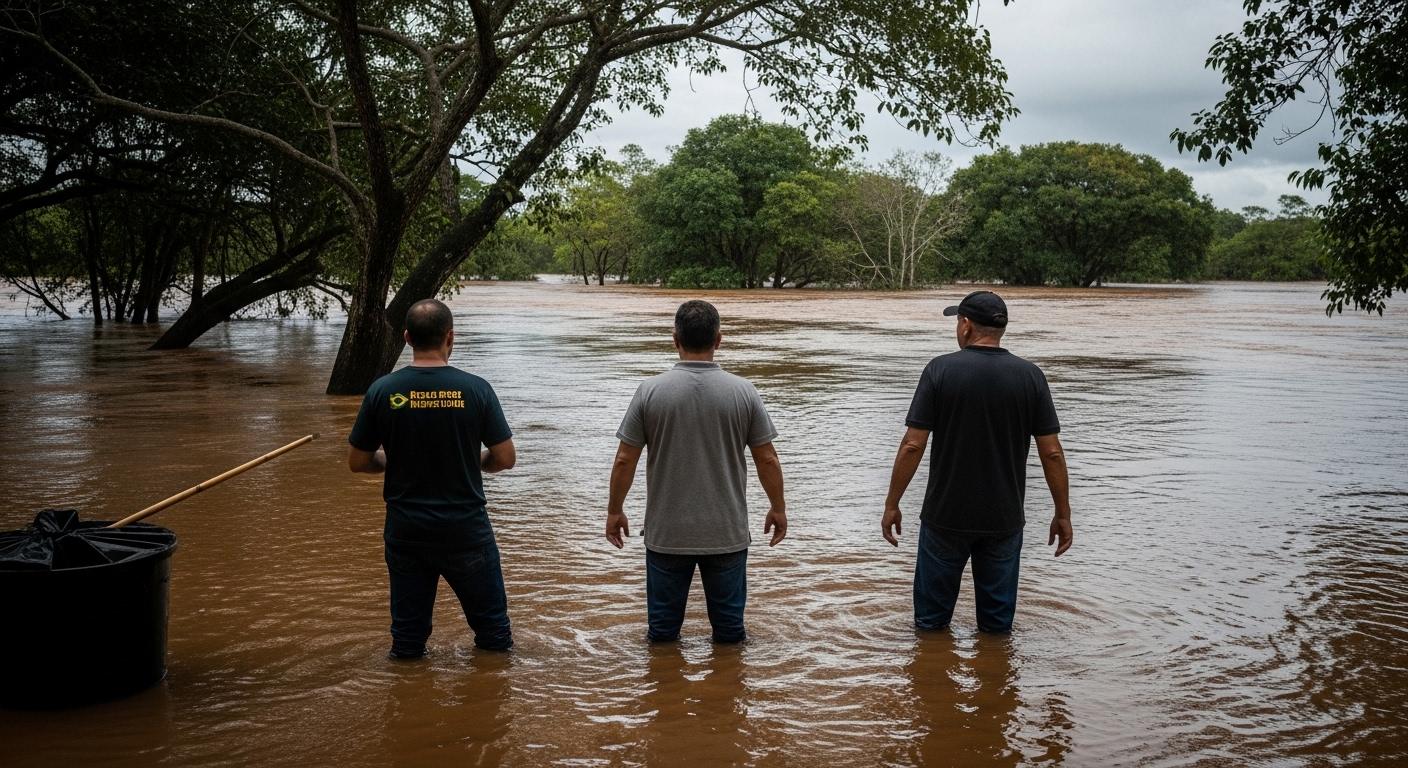
Aerial view of Amazon rivers during floods with Indigenous communities nearby.
Updated: March 16, 2026
Brazil stands at a crossroads where the environmental Environment Brazil framework must meet development pressures, urban growth, and global expectations. This moment calls for careful analysis of policy signals, enforcement outcomes, and the lived realities of communities who depend on forests, rivers, and land. As debates move from headlines to implementation, the quality of governance will determine whether gains in biodiversity protection translate into lasting social and economic resilience for the country.
Context: Brazil’s environmental governance under pressure
Across Brazil, ecosystems are both a barometer and a battleground for policy choices. Deforestation in the Amazon, shifts in river management, and the retention of protected areas reflect a spectrum of institutional capacity and political will. Public funding for conservation programs remains a critical constraint for agencies tasked with monitoring vast frontiers, while courts and civil society groups increasingly test the boundaries of executive action. In this environment, success hinges on coherence between national laws, state and municipal enforcement, and the daily practices of communities who steward forests and water sources.
Levers of change—such as land tenure, permissioning for resource extraction, and the inclusion of traditional know-how—are being recalibrated in ways that seek to balance sovereignty with regional needs. Observers note that policy coherence is as important as new legislation: when land rights are unclear or enforcement is uneven, even well-intentioned protections can fail to deliver tangible results. The current moment also features heightened attention from international partners who tie financial and technical support to measurable outcomes for biodiversity and climate resilience.
Signals shaping the policy landscape
Three concurrent signals illustrate how the policy terrain is changing. First, enforcement actions at major hubs—such as seizures of endangered species or wildlife products—signal a tightening stance against illicit trade and a willingness to apply penalties across borders. Such actions can deter crime but also raise questions about supply chains, interdiction costs, and the unintended consequences for legitimate livelihoods that depend on forest resources.
Second, civil society campaigns and environmental justice movements have demonstrated that governance is only as legitimate as it is inclusive. When communities organize to resist privatization or to demand transparent processes for waterway management, policymakers must reckon with a public mandate that transcends traditional interest groups. This pressure has helped pause or reconsider certain bids for privatization and highlighted the need for neutral, accountable institutions.
Third, international dialogue—whether through biodiversity agreements, multi-lateral finance, or partnerships with European and other governments—continues to shape domestic agendas. When a country faces global scrutiny over endangered species protection or forest stewardship, domestic reforms are often accelerated or revised in response to expectations about trade, finance, and reputation. The tension between sovereignty and global norms remains a defining feature of the environmental policy debate in Brazil.
Livelihoods, ecosystems, and the economics of conservation
Conservation strategies must reckon with the people who live in or near protected landscapes. For many communities, forests and rivers are not only ecological assets but sources of food, water, and income. When conservation policies fail to account for these realities, the risk of conflict increases and climate and biodiversity gains may suffer. The economics of protection thus depends on co-management models that link ecological outcomes to tangible benefits—such as sustainable harvest opportunities, ecotourism, and secure land rights for Indigenous groups and traditional communities.
The case studies reflected in recent reporting—ranging from habitat protection debates to waterway governance—underscore a broader pattern: ecological resilience is inseparable from governance legitimacy and local opportunity. International attention on Brazil’s biodiversity, including calls for stronger protections for emblematic species or trees, can catalyze reforms but must be paired with credible, locally grounded implementation plans. Without that link, ambitious targets risk becoming symbolic pledges rather than practical, long-term changes.
Paths forward and scenarios
Looking ahead, several credible scenarios offer paths toward more resilient environmental governance in Brazil. A scenario anchored in collaborative governance would prioritize co-management with Indigenous and riverine communities, backed by transparent funding, independent monitoring, and public reporting. In this model, biodiversity protections align with sustainable livelihoods, and enforcement becomes predictable rather than reactive.
A second scenario emphasizes institutional strengthening: clarifying land tenure, expanding protected areas, harmonizing forest, water, and mining policies, and investing in scientific capacity and data infrastructure. This approach reduces policy fragmentation and enhances the public’s ability to track progress. A third scenario contends with the political economy of reform, recognizing that changes in leadership or fiscal priorities can stall momentum unless supported by broad coalitions and durable financing mechanisms. Each scenario carries risks—implementation gaps, governance fatigue, or external shocks—and each requires patient, ongoing investment in people, data, and institutions.
Source Context
Actionable Takeaways
- Strengthen visible, transparent enforcement with community oversight to connect biodiversity protections with sustainable livelihoods.
- Recognize and secure Indigenous and traditional community land rights, expanding co-management mechanisms for forests and waterways.
- Align conservation funding with development goals, using performance-based funding and independent audits to ensure accountable results.
- Invest in open data platforms for forest and water monitoring, enabling inclusive stakeholder access and robust progress reporting.
- Foster international partnerships to mobilize finance, technology, and capacity-building that support resilient, community-centered conservation.