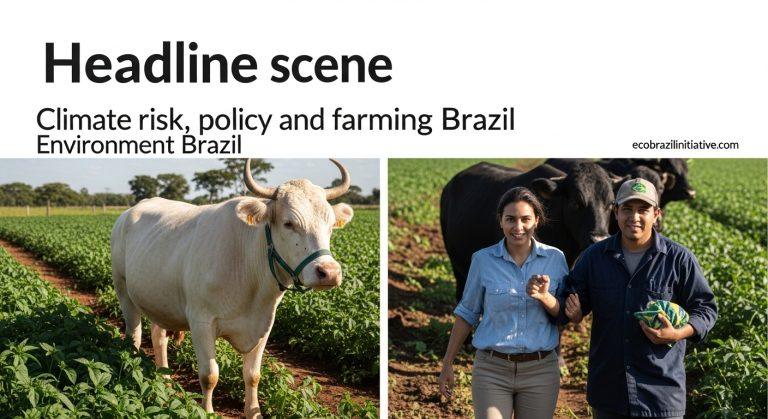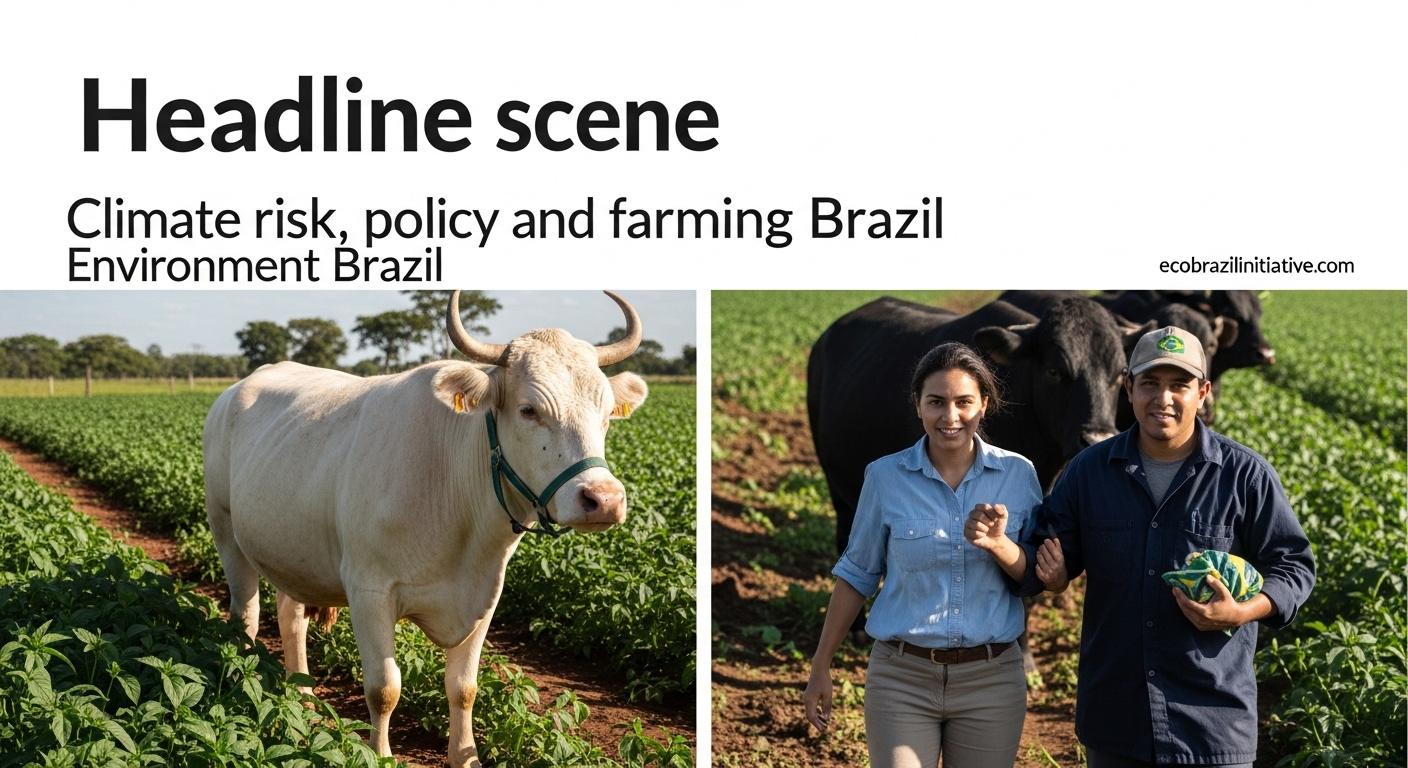
Brazilian landscape showing forests, agriculture, and urban resilience amid climate risk.
Updated: March 16, 2026
In Brazil, the intersection of climate risk, data governance, and agrarian livelihoods shapes an uneven path toward resilience, illustrating brazil Environment Brazil as a framework for analysis. As rainfall patterns intensify and urban floodplains expand, communities, policymakers, and farmers are pressed to reconcile immediate needs with longer-term stewardship. This analysis weighs where progress stands, where gaps persist, and what choices can translate into practical resilience for households across Brazil’s diverse regions.
Rising floods and climate resilience
Across coastal cities, river towns, and inland settlements, elevated precipitation and shifting seasonality stress drainage networks, lower soil moisture resilience, and amplify flood risk. A practical reading of these dynamics centers on three levers: land use planning, nature-based protection, and targeted investments in municipal infrastructure. When urban segments rely on green spaces and permeable surfaces, flash floods can be tempered; when rural landscapes retain soil through agroforestry or cover crops, erosion slows and agriculture becomes more predictable. The outcome is not only shorter-term relief but a pathway to resilient systems that reduce emergency costs and protect livelihoods.
Policy, data, and compliance in a changing landscape
Data is the currency of policy in a country where external drivers such as the European Union Deforestation Regulation compel traceability from field to consumer. A free Brazilian platform that uses government data to track EUDR compliance demonstrates how transparency can connect farmers, processors, and retailers without creating a labyrinth of forms. Yet governance challenges remain: data quality varies by region, rural connectivity limits real time updates, and incentives must align with enforcement to avoid patchwork reporting. The key question is whether such data ecosystems translate into faster adaptation by enabling finance, guiding land use decisions, and validating sustainable practices at scale.
Agriculture, land use, and the carbon equation
Brazil’s soy and beef sectors sit at the center of climate narratives, but a breadth of farmers are testing green initiatives that broaden the carbon story beyond trees. Practices like reduced tillage, integrated pest management, and agroforestry buffers can lower inputs while improving soil health. Whether these measures are scalable depends on access to credit, market signals, and extension services. The emerging carbon accounting logic whether through voluntary markets or policy backed programs has the potential to reward stewardship, but it also raises questions about land rights, verification, and price volatility that communities must navigate.
Economic and social implications for communities
Resilience planning must align with livelihoods. Smallholders and family farms face trade offs between short-term productivity and long-term sustainability, and regional disparities in infrastructure can widen those gaps. When climate shocks recur, access to insurance, risk sharing mechanisms, and climate resilient credit lines becomes as important as tree planting incentives. The success of any strategy relies on inclusive participation: local associations, indigenous communities, and women farmers who often steward marginal lands deserve a seat at the policy table. Scenario framing—from incremental improvements to bold transitions—helps communities prepare for multiple futures rather than a single forecast.
Actionable Takeaways
- Invest in integrated water management and flood resilient urban planning
- Expand and validate data platforms for EUDR compliance and supply chain transparency
- Scale sustainable farming practices through finance extension services and targeted incentives
- Prioritize nature based solutions and thoughtful land use planning to reduce erosion
- Support community led monitoring, resilience networks, and inclusive governance
Source Context
Context and sources cited for further reading.
From an editorial perspective, separate confirmed facts from early speculation and revisit assumptions as new verified information appears.
Track official statements, compare independent outlets, and focus on what is confirmed versus what remains under investigation.
For practical decisions, evaluate near-term risk, likely scenarios, and timing before reacting to fast-moving headlines.
Use source quality checks: publication reputation, named attribution, publication time, and consistency across multiple reports.
Cross-check key numbers, proper names, and dates before drawing conclusions; early reporting can shift as agencies, teams, or companies release fuller context.
When claims rely on anonymous sourcing, treat them as provisional signals and wait for corroboration from official records or multiple independent outlets.